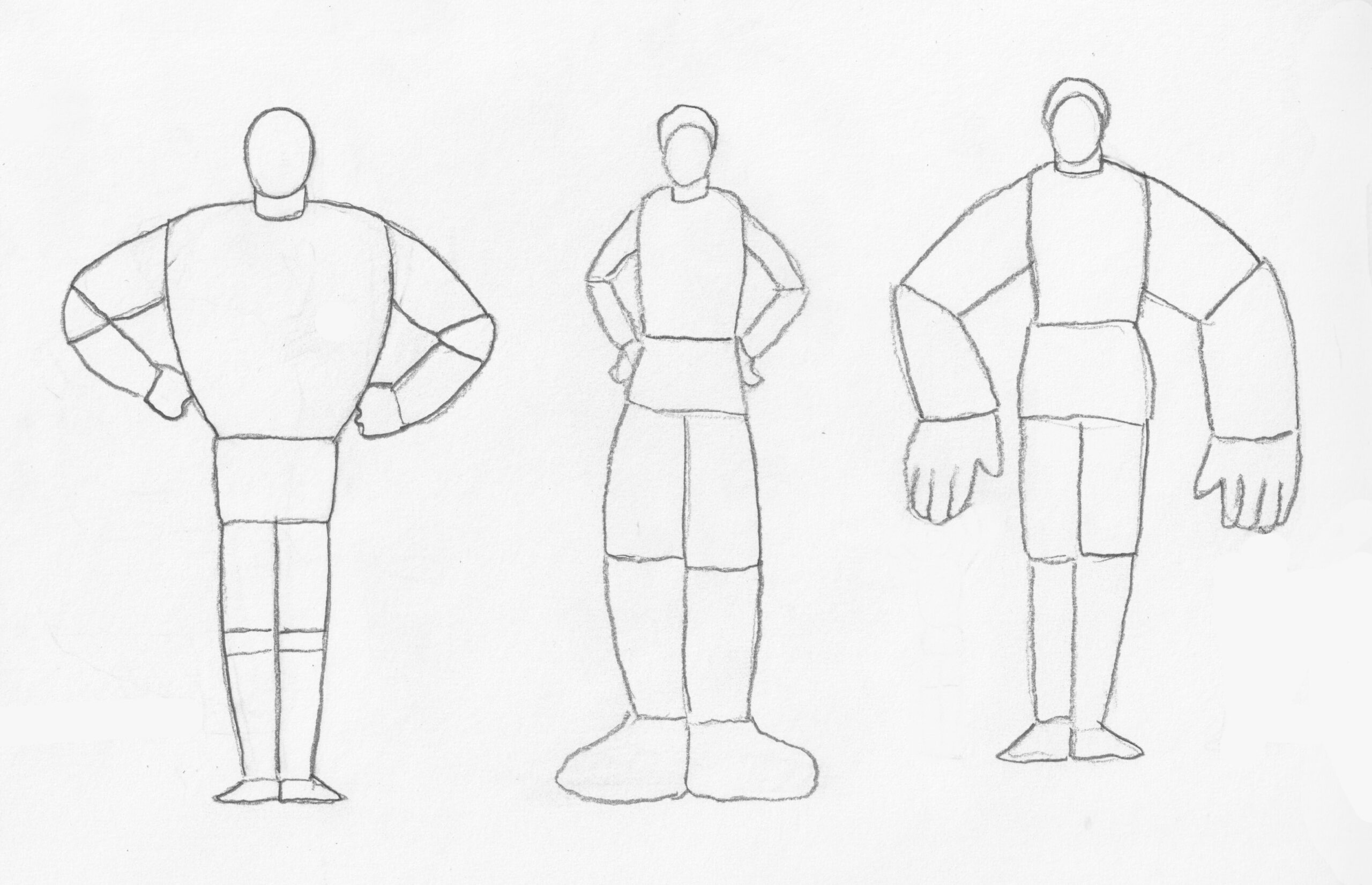
Chapter 1 | THE HUMAN FIGURE
There is nothing wrong with drawing a stick figure, but it is also fun to turn it into a real human figure step by step. From the upper grades of primary school, students enjoy learning to draw a human figure more realistically. They can then apply this in their own way.
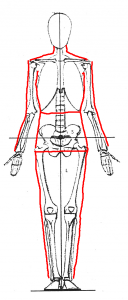
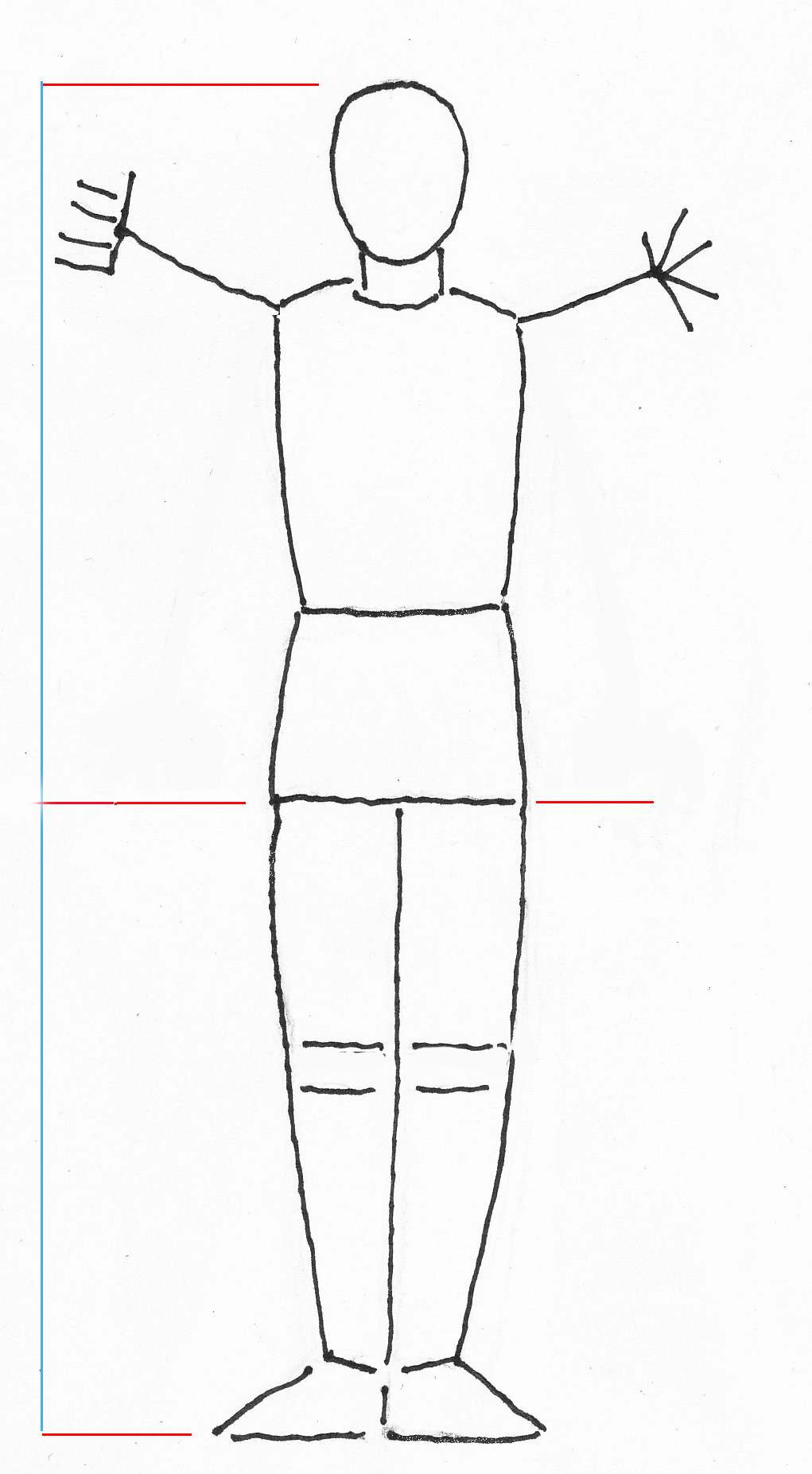
The structure of the human figure is determined by the skeleton. This is clearly visible in the skeleton with the red lines. Pay close attention to the structure of the torso: The upper part of the torso is where your chest, heart, ribs, and lungs are located. The lower part is for your stomach, buttocks, and hips. The soft waist is located exactly in between.
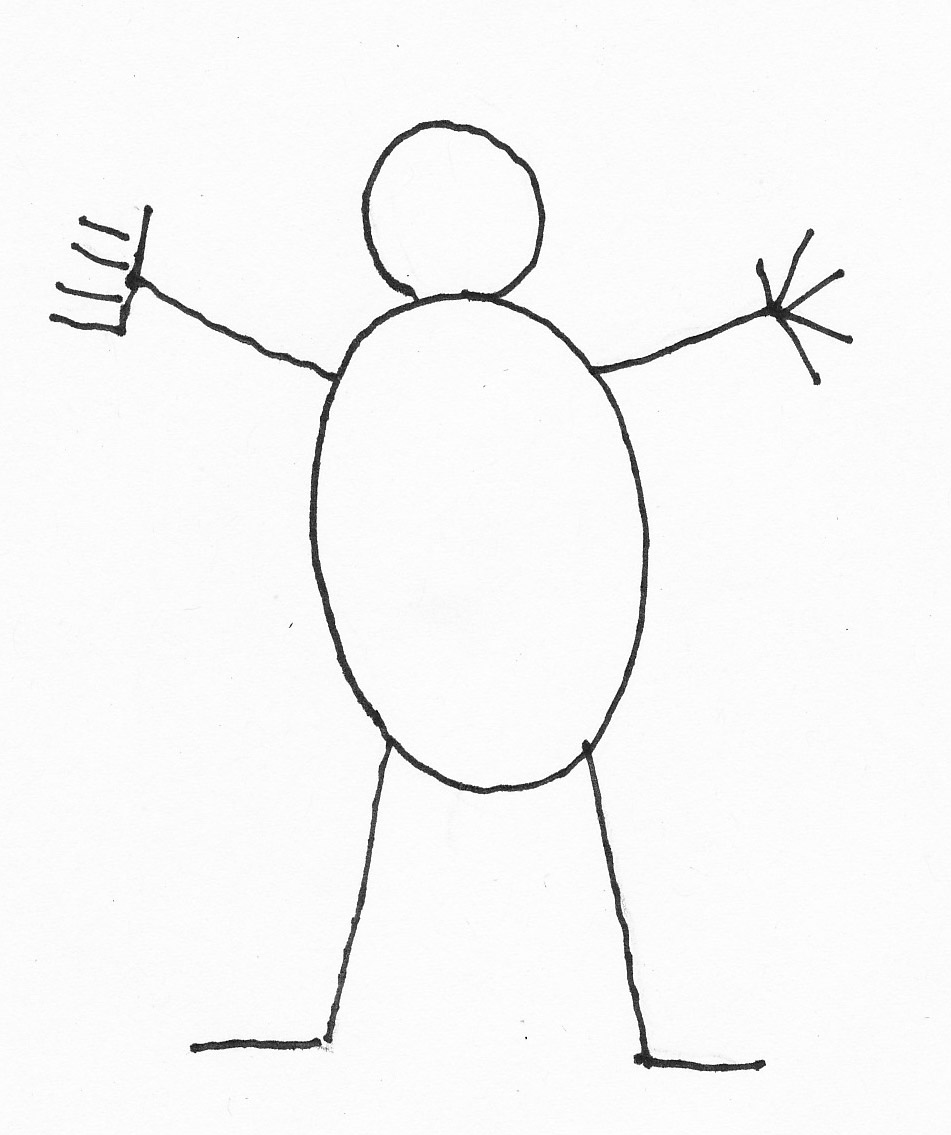
To remember the body shape well, it is good to practice this step by step once. In each step, you change something of the stick figure into a human figure.
Step 1: Draw this stick figure
Stap 2: In a new drawing, make the head egg-shaped and add a neck.

Step 3: Transform the body into a real torso (or trunk). The upper part represents your chest, heart, ribs, and lungs. The lower part represents your stomach, buttocks, and hips. The soft waist is located exactly in between. Check for yourself.
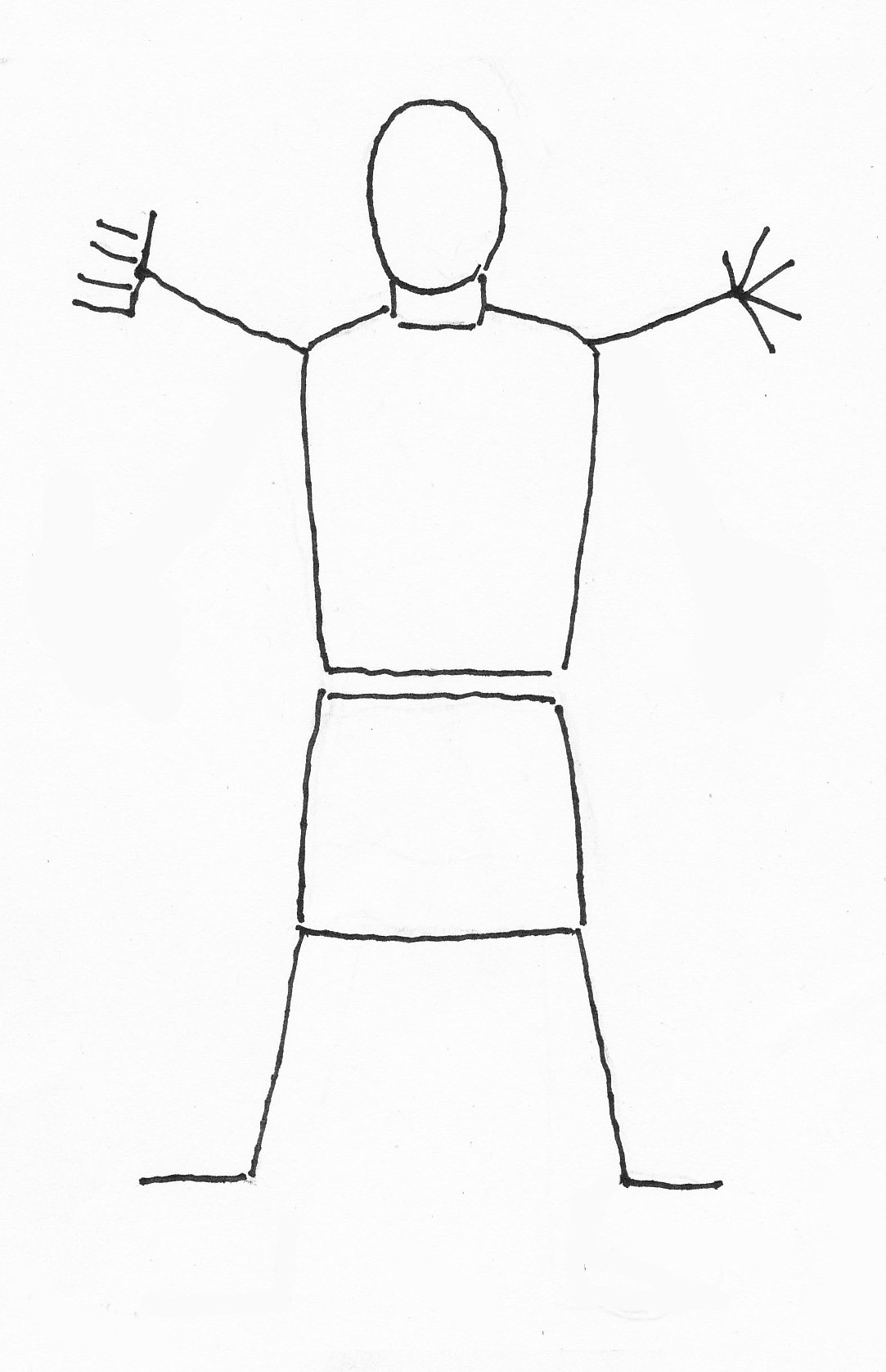
Step 4: In yet another new drawing, give the little figure with the torso real legs. Make sure you draw legs about the same length as the rest of our body (look at the guidelines). Thighs are thicker than lower legs. If you stand up and hold your feet together, your legs combined are narrower at the bottom than at your hips. Check for yourself. Also draw the location of the knees.
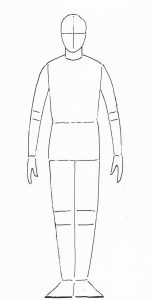
Step 5: As the final step, give the figure real arms. The arms emerge from the shoulders. The upper arms are thicker than the forearms. If you let your arms hang down, your hands will definitely reach your upper thighs. Check for yourself when you stand upright. The arms bend at the elbow and the wrist.
In the skeleton drawing with the red lines, the arms were turned out, with the palms facing forward.
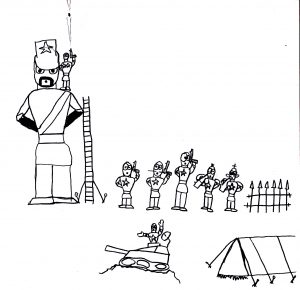
You have now learned to draw the structure of a human figure. You can apply it in your own way. Here, a very young 6th grade primary school pupil has used the model figure from this lesson for a general and his soldiers. To show how important he considers the general, he has drawn him much larger. The soldiers even need a ladder to climb onto his shoulder. In each figure he has drawn the torso in particular very consistently, with a chest and stomach/hip section. I love the way pupils apply lessons in their own way.
Exercise 2: Draw a standing model figure with arms and legs spread and straight. Check if the arms and legs are approximately the correct length.