Chapter 6 | SKETCHING
It’s wonderful to be able to sketch, something from your surroundings or from your imagination. Maybe a quick notation of an impression or idea you would like to remember. In sketches you can quickly jot something down, mess around, scribble, slip, smudge and change endlessly.
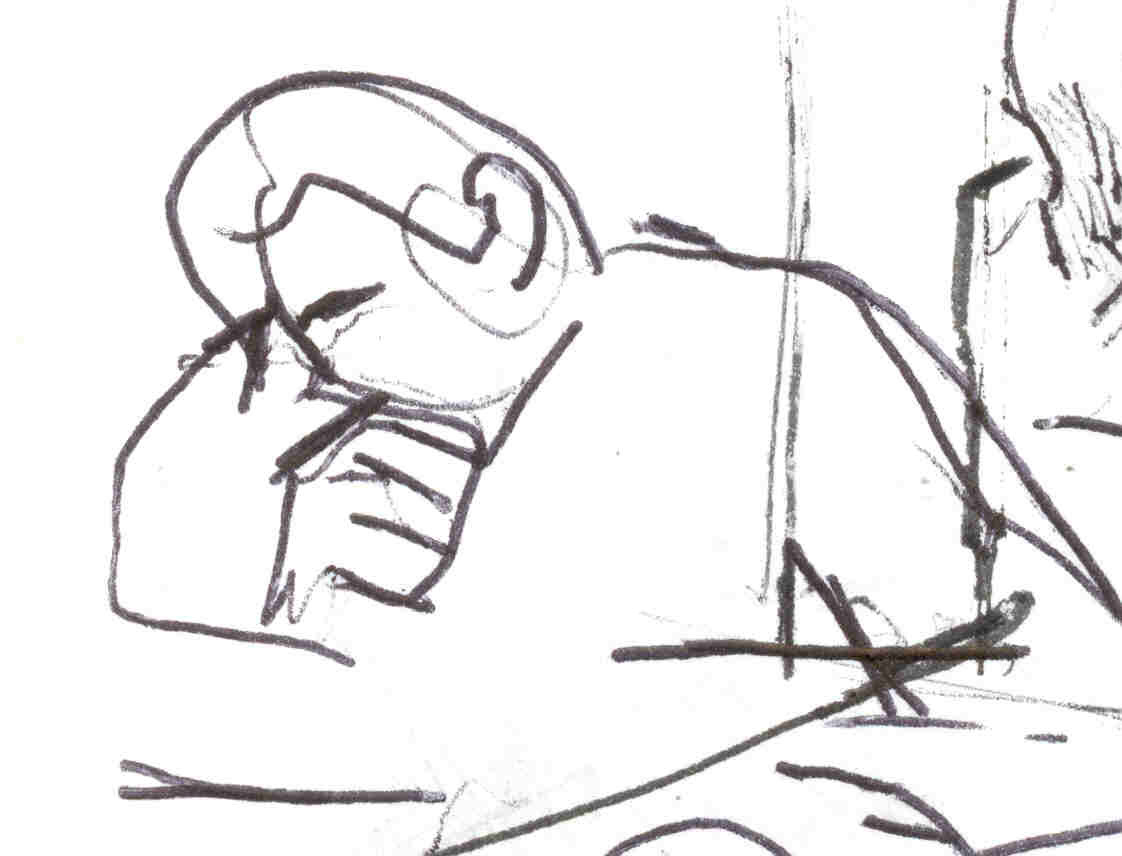
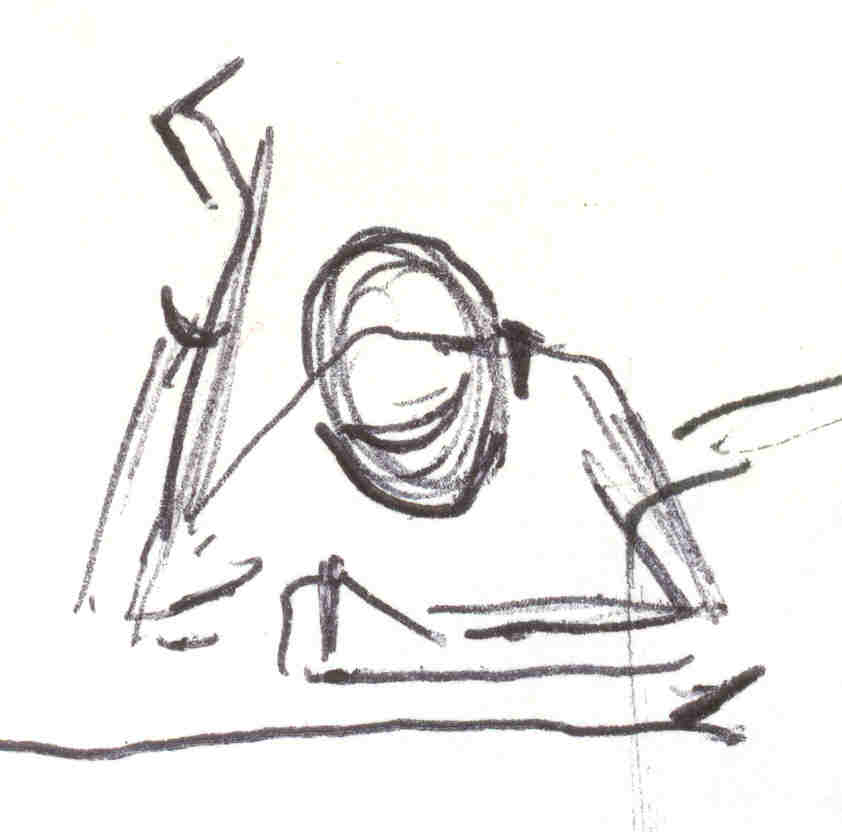
Sketches can consist of just a few lines, like my sketches of students taking a test.
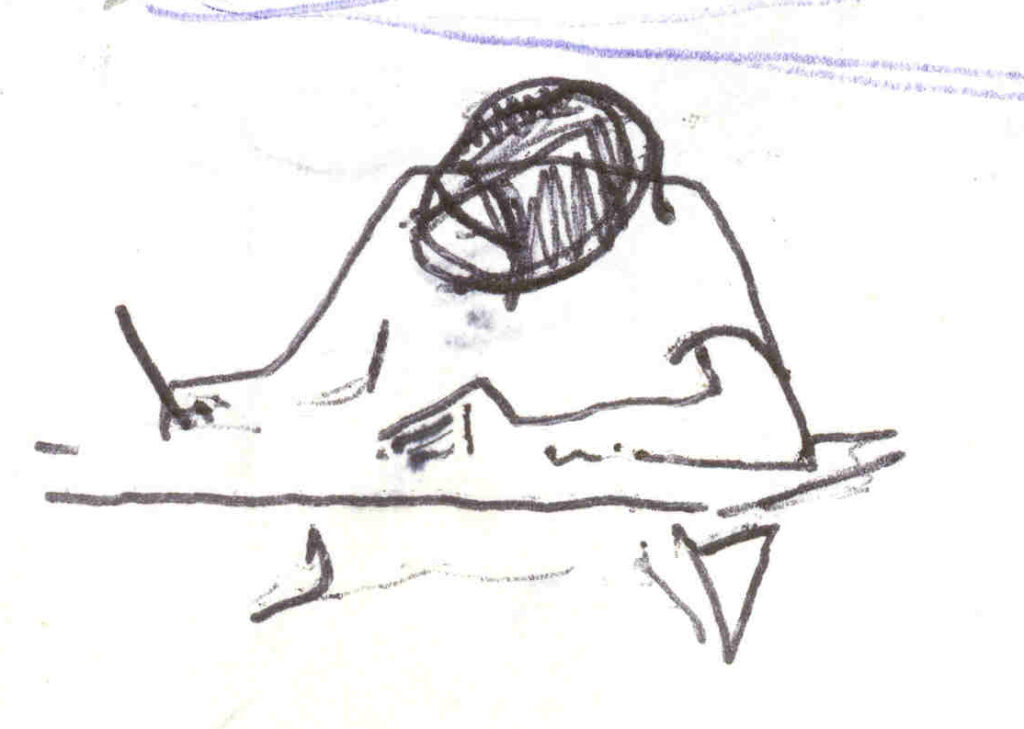
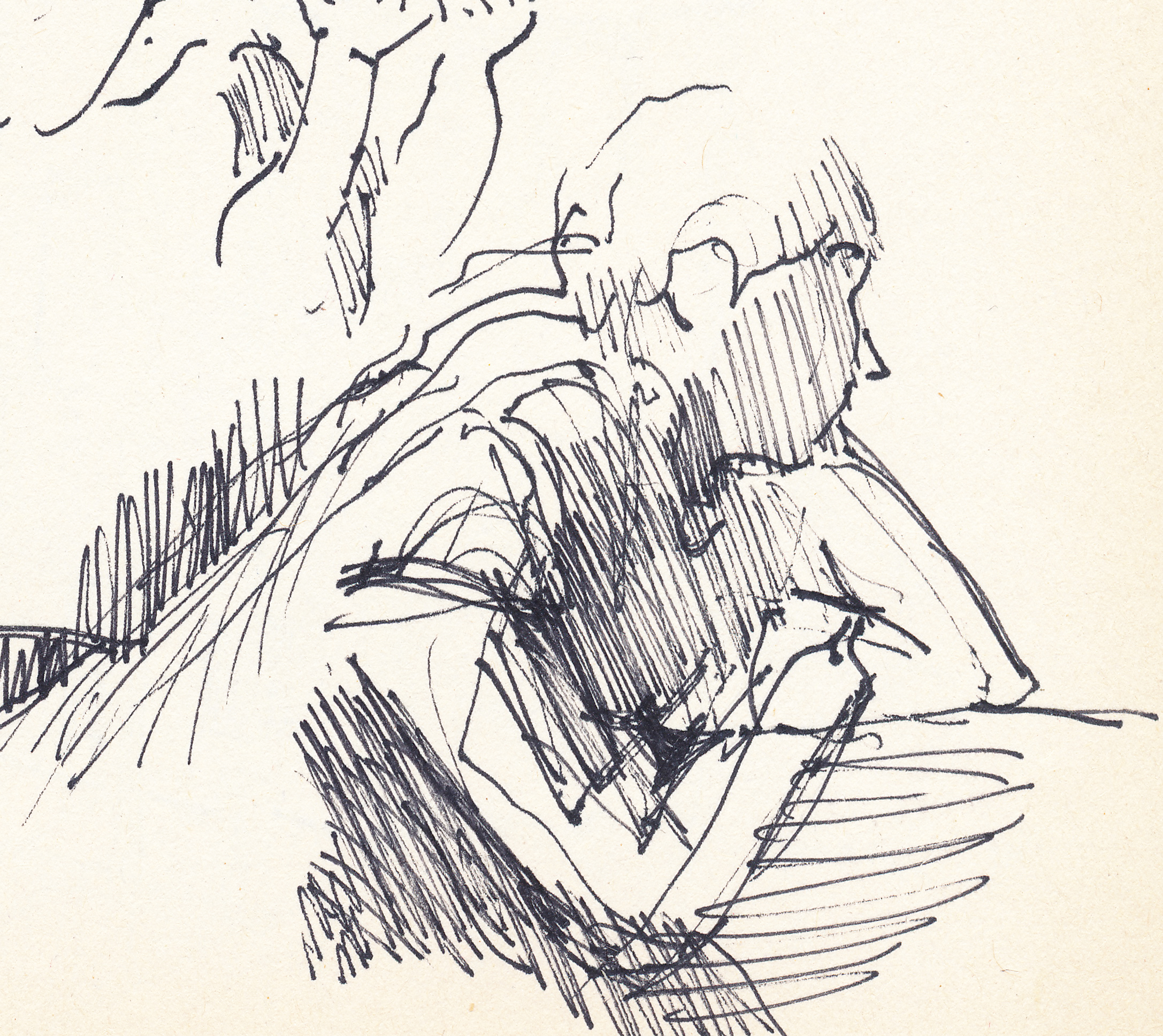
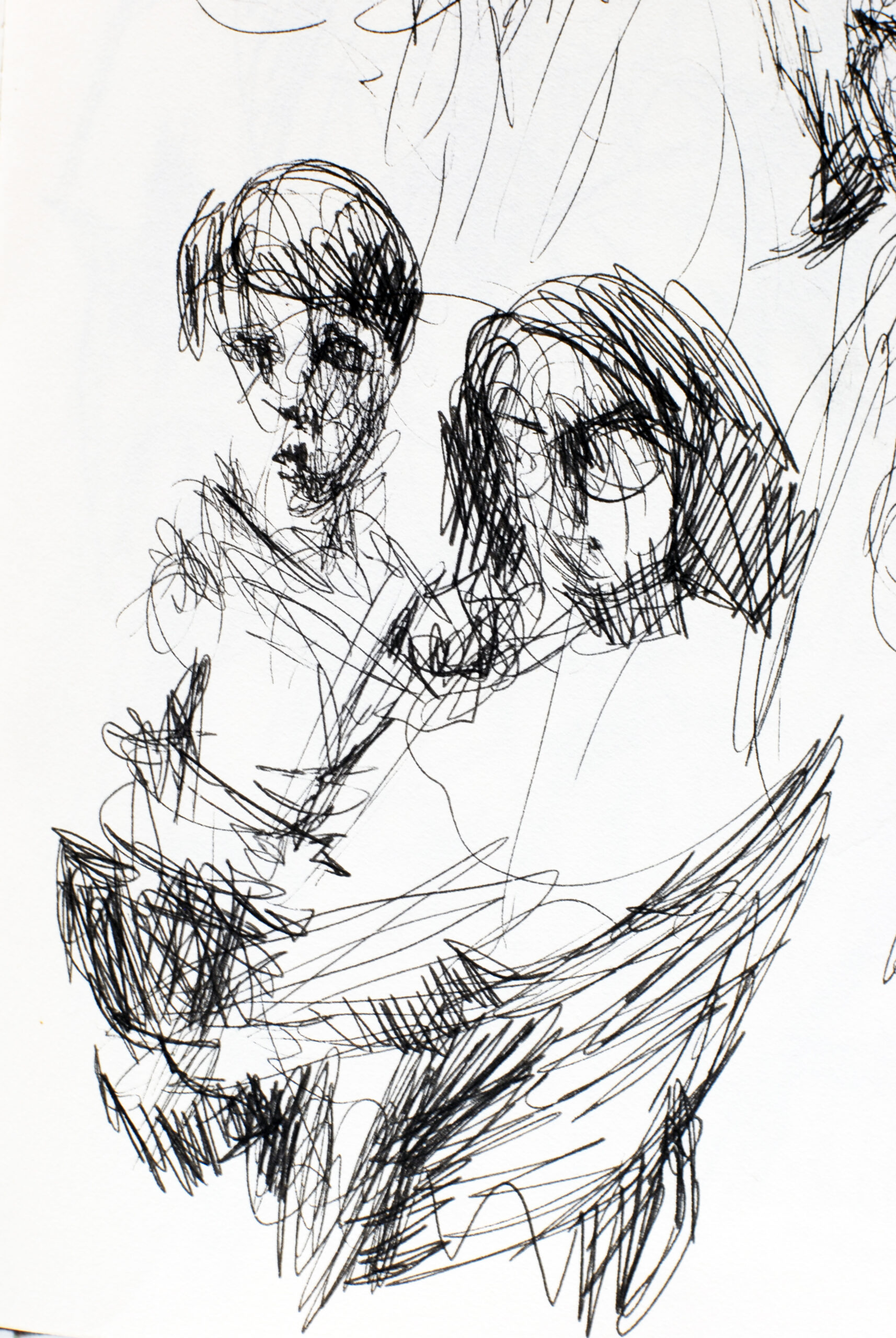
…or a lot of scribbles, such as a girl leaning on a table and a mother with her child at the airport.
Great artists of the past are often masters of sketching. A striking example is a 1922 portrait of the poet Rilke by the Russian artist Leonid Pasternak. You can almost feel his drawing hand constantly in motion. Only the head is rendered somewhat more softly. Notice all the scribbles of figures and buildings surrounding the figure. Pasternak used the sketch as preparation for a painting.
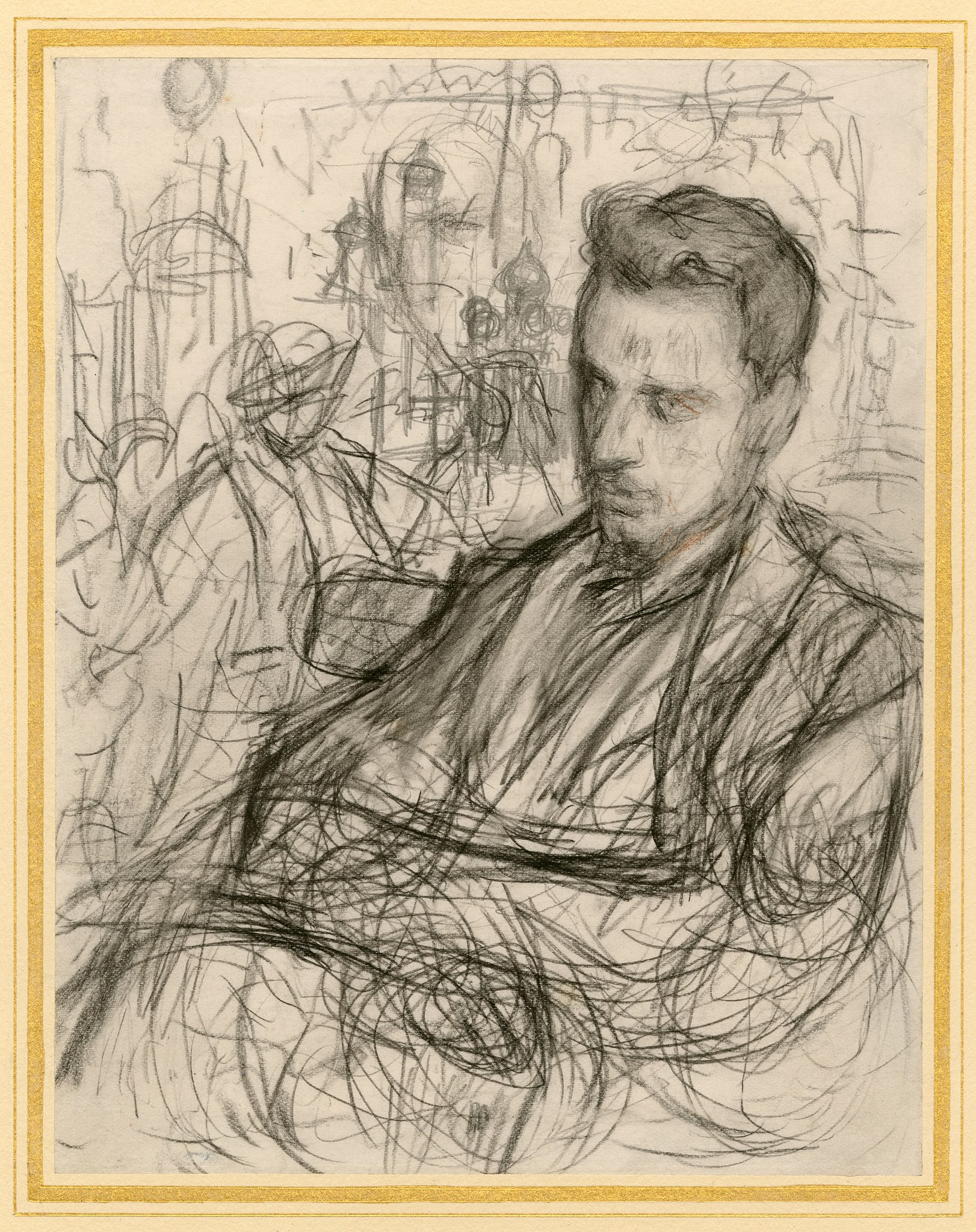
Exercise 1: Draw a frame with roughly the same proportions. Make your own sketch of Pasternak’s drawing in a maximum of 5 minutes. It’s impossible to copy it exactly, so don’t worry about that! Try to imitate the loose way of sketching, alternating between light and dark.
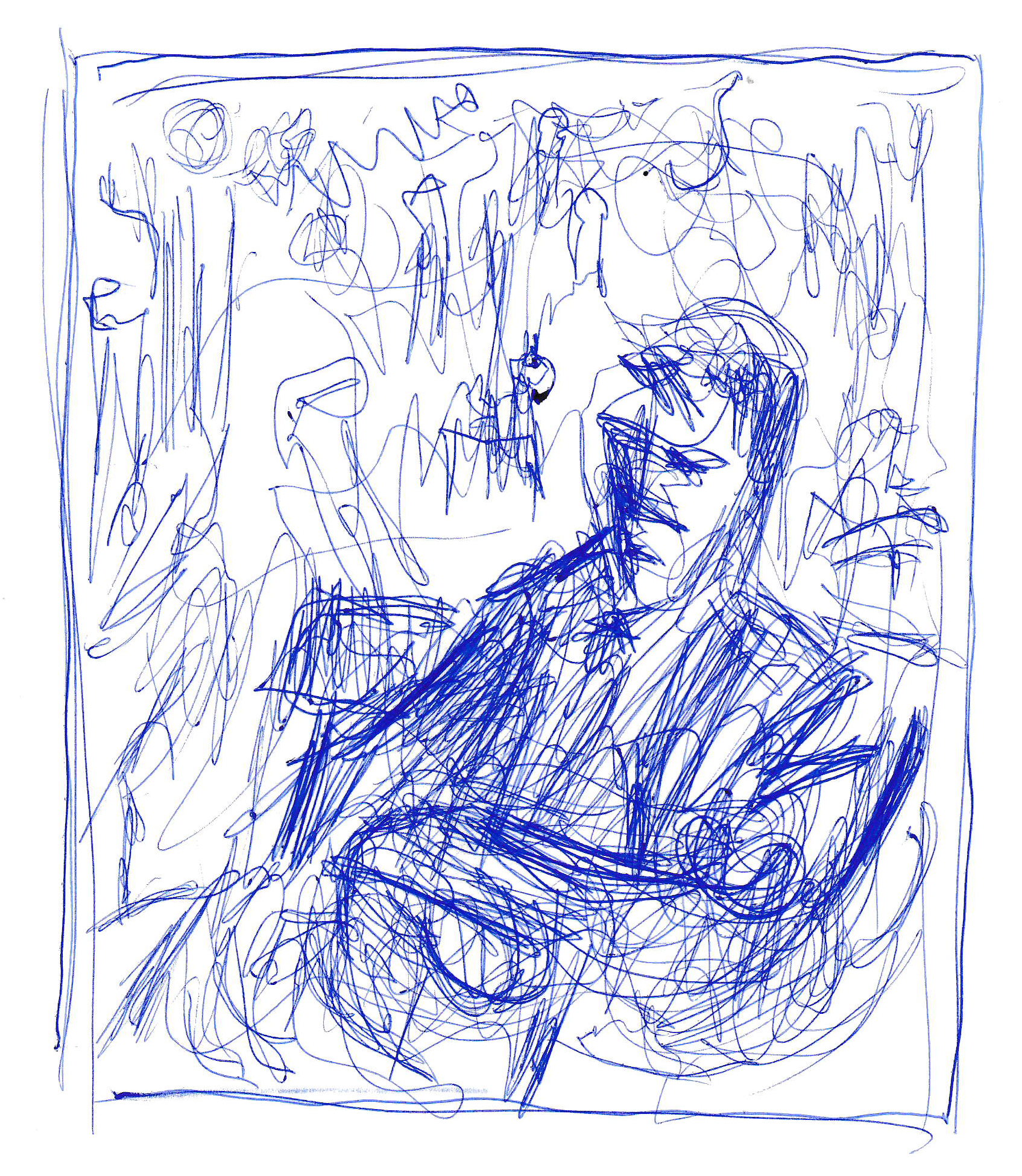
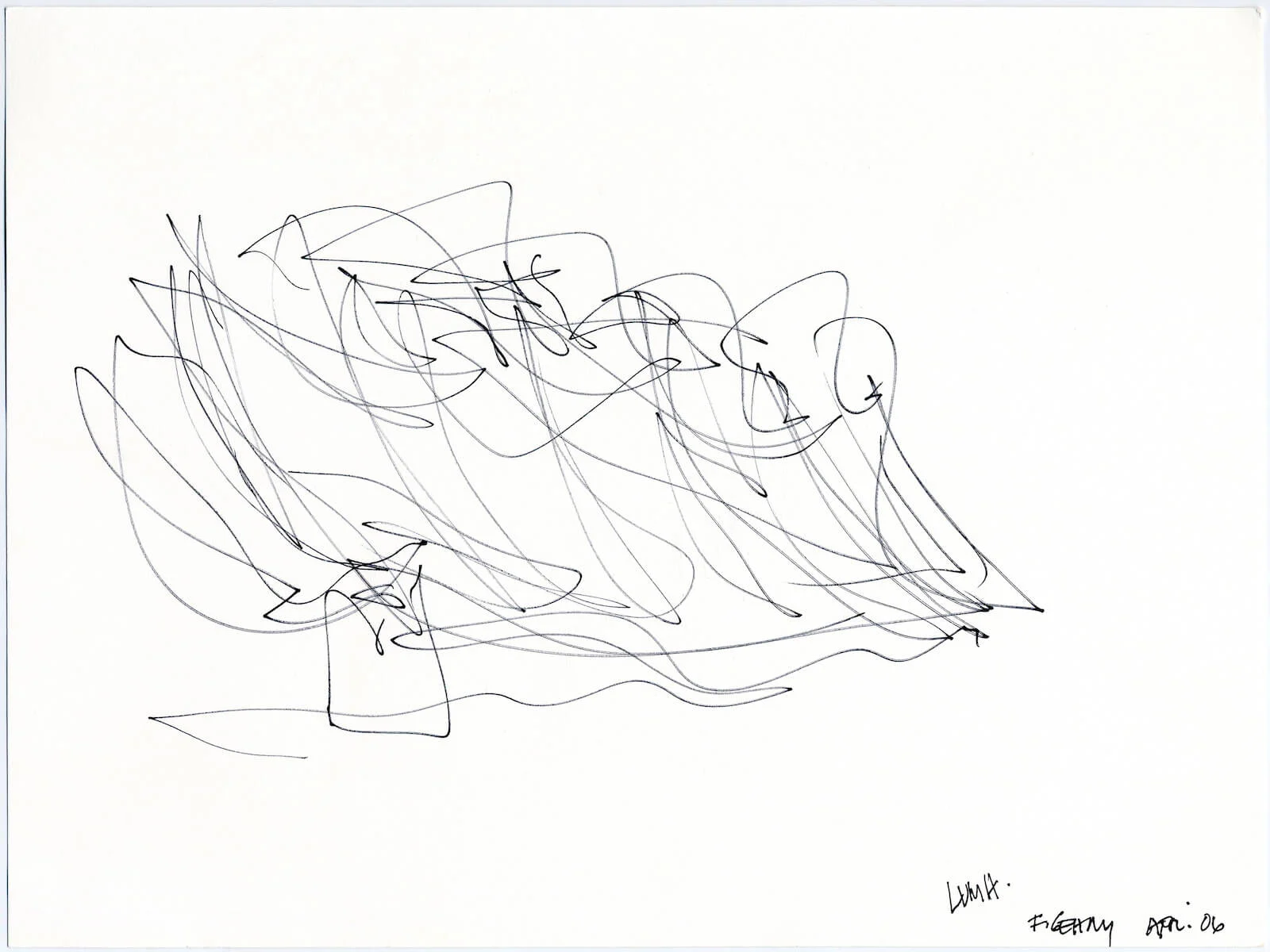
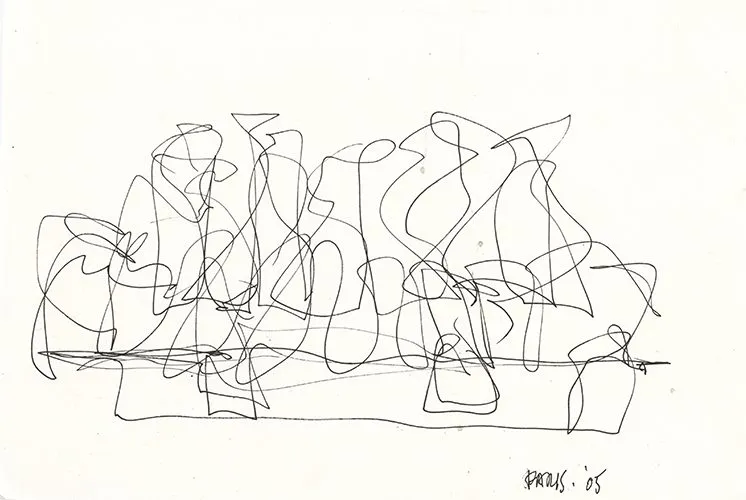
Finally, looking at the next two scribbled sketches, you probably wouldn’t guess they are the very first steps in the design of a spectacular high-tech museum in a large park in Paris. Sketches can form the basis of great works of art.