Chapter 2 | THE HORIZON
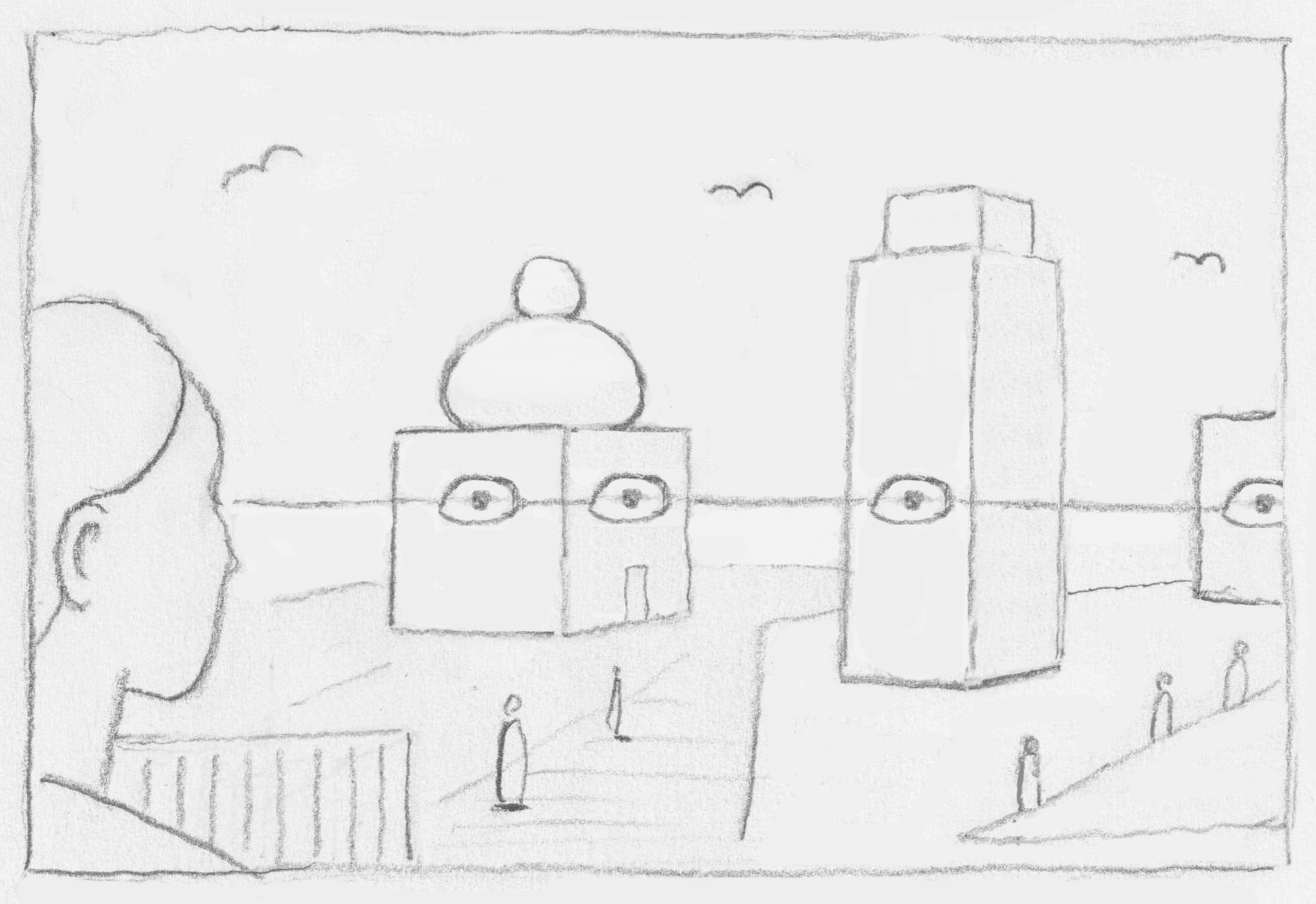
In a perspective drawing, the horizon is the imaginary horizontal line in the far distance that indicates the viewer’s eye level. It’s the foundation from which you create depth. The girl on the left in the drawing is looking along with us. Everything above the horizon is higher than us, everything below it is lower than us.
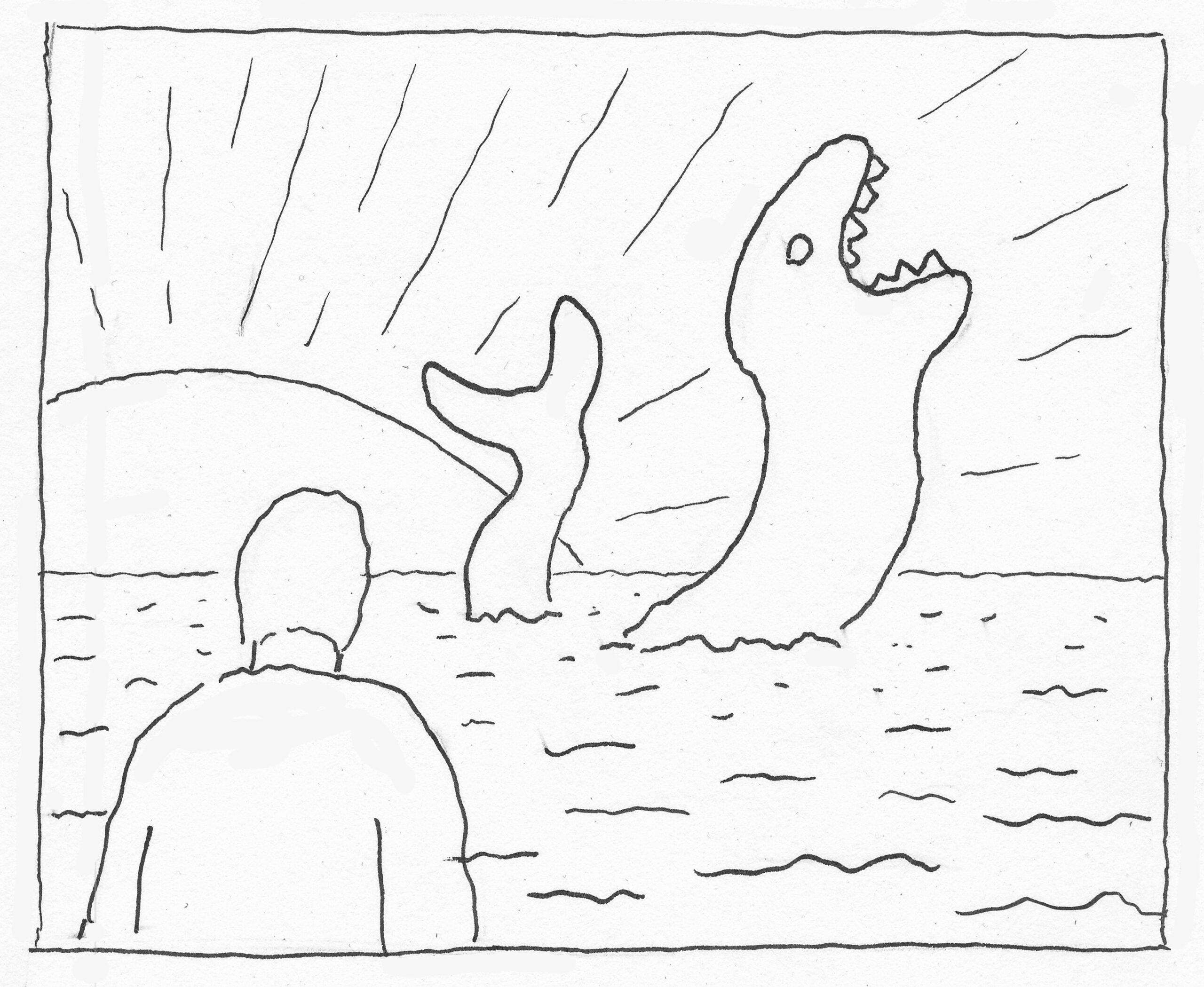
Eye level: In the next drawing, again the head of the figure in the foreground is again drawn exactly at our eye level. The horizon here is the transition between sea and sky. The distant sea monster is so enormous that it even rises above our horizon/eye level.
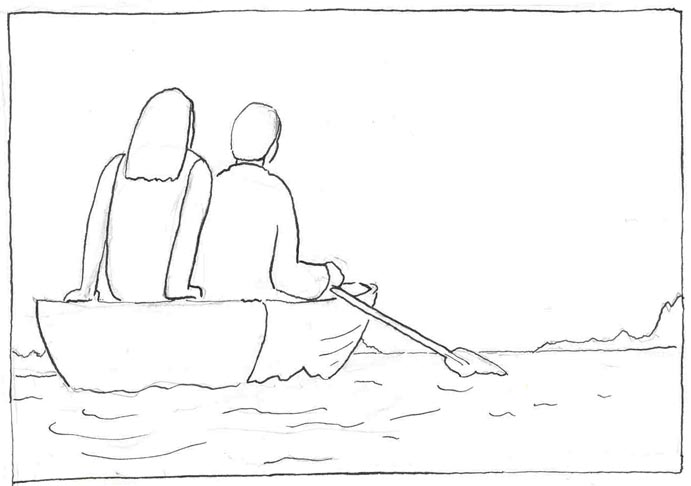
A low point of view/angle: it seems as if we are swimming behind a boat with two people. Maybe we are a dolphin, a shark, a snorkeler or the periscope of a submarine. The boat with the two people protrudes well above our horizon, above our eye level.
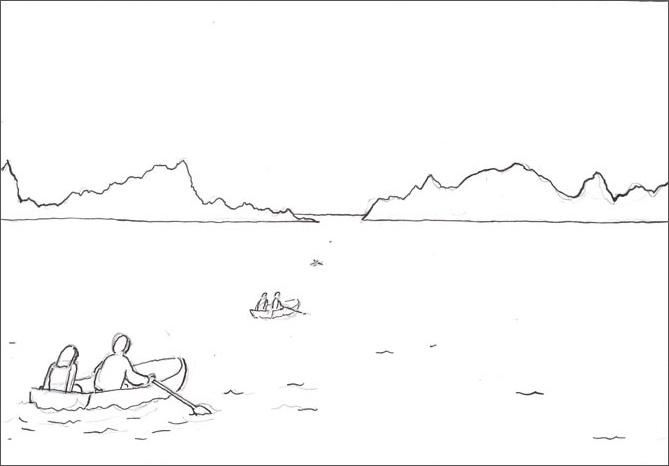
A high point of view/high angle: in the second drawing we fly like a bird, a drone or Superman high above two boats. Only the high rocks in the distance are just a little higher than our horizon/eye level.
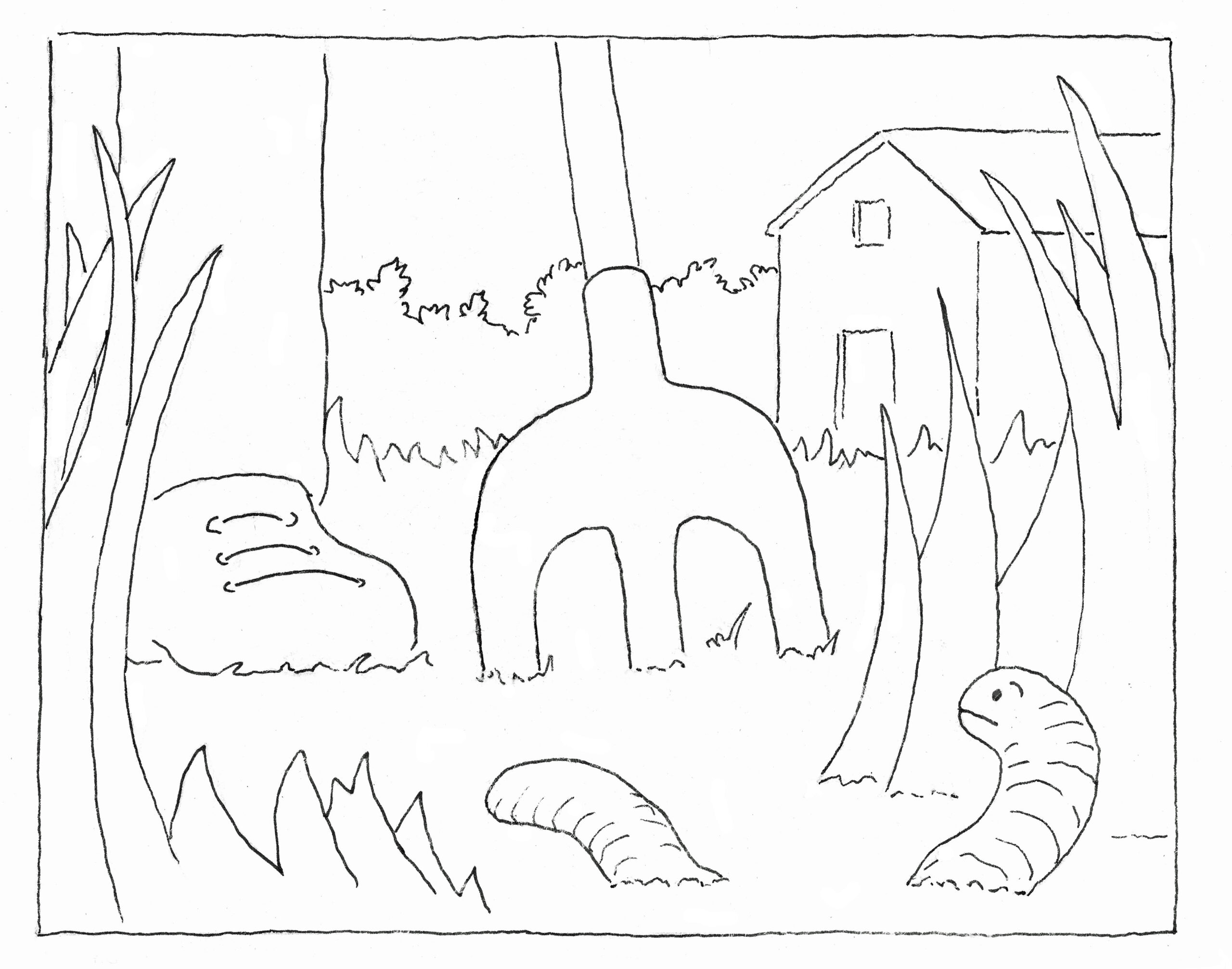
If we wanted to draw our environment from a very low point of view, we then we would have to lie on our stomachs or put ourselves in the shoes of a mole, a worm, a slug or a hedgehog.
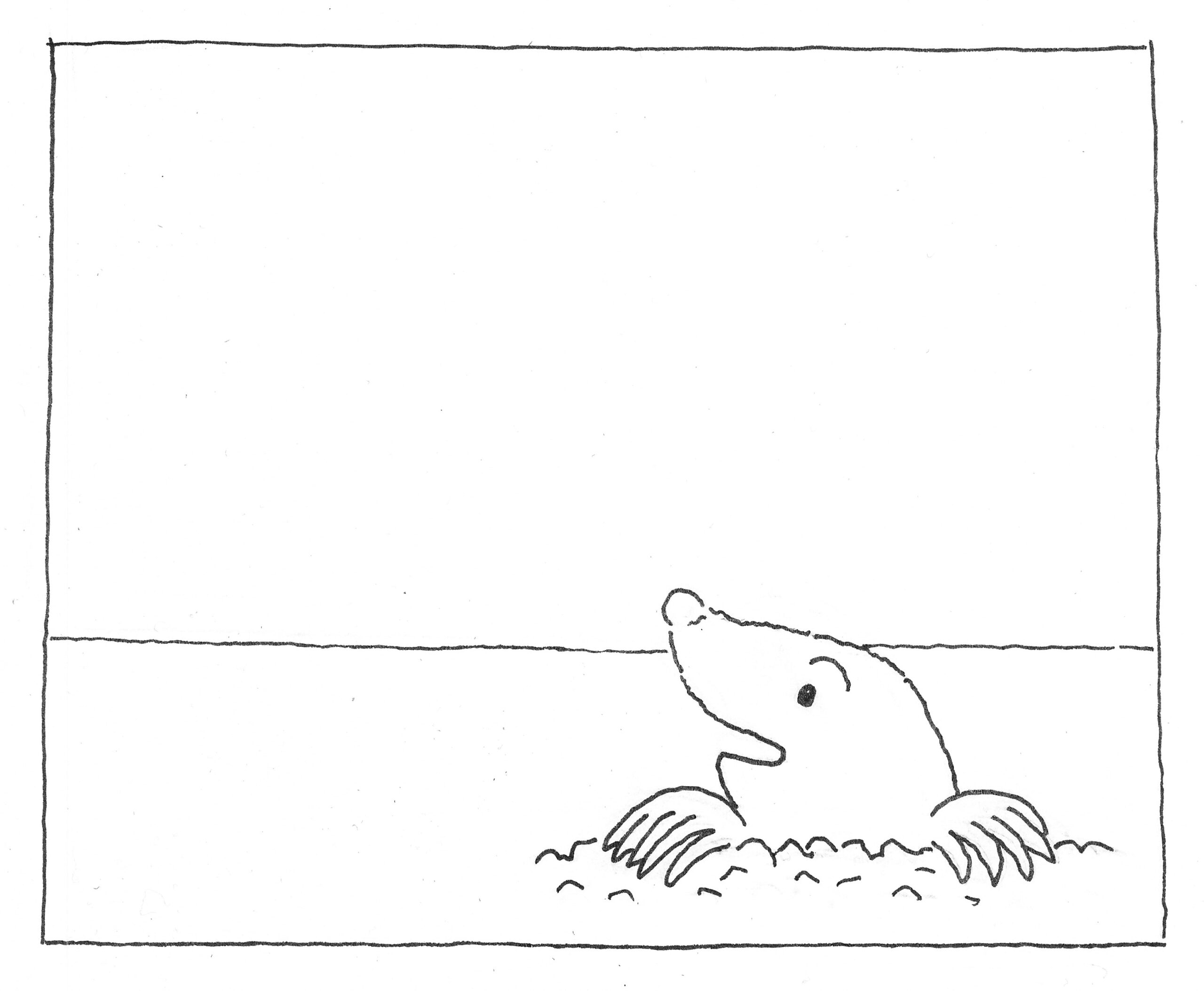
Extra: finish the next drawing. “After digging tunnels all night, what does this mole see when it sticks its head above the ground in the early morning?” If you draw the horizon line very lightly, you can erase it later.

In the next chapter you will learn how to combine the different viewpoints (eye level, low and high) with the reduction from Chapter 1.