Chapter 2 | GUIDELINES
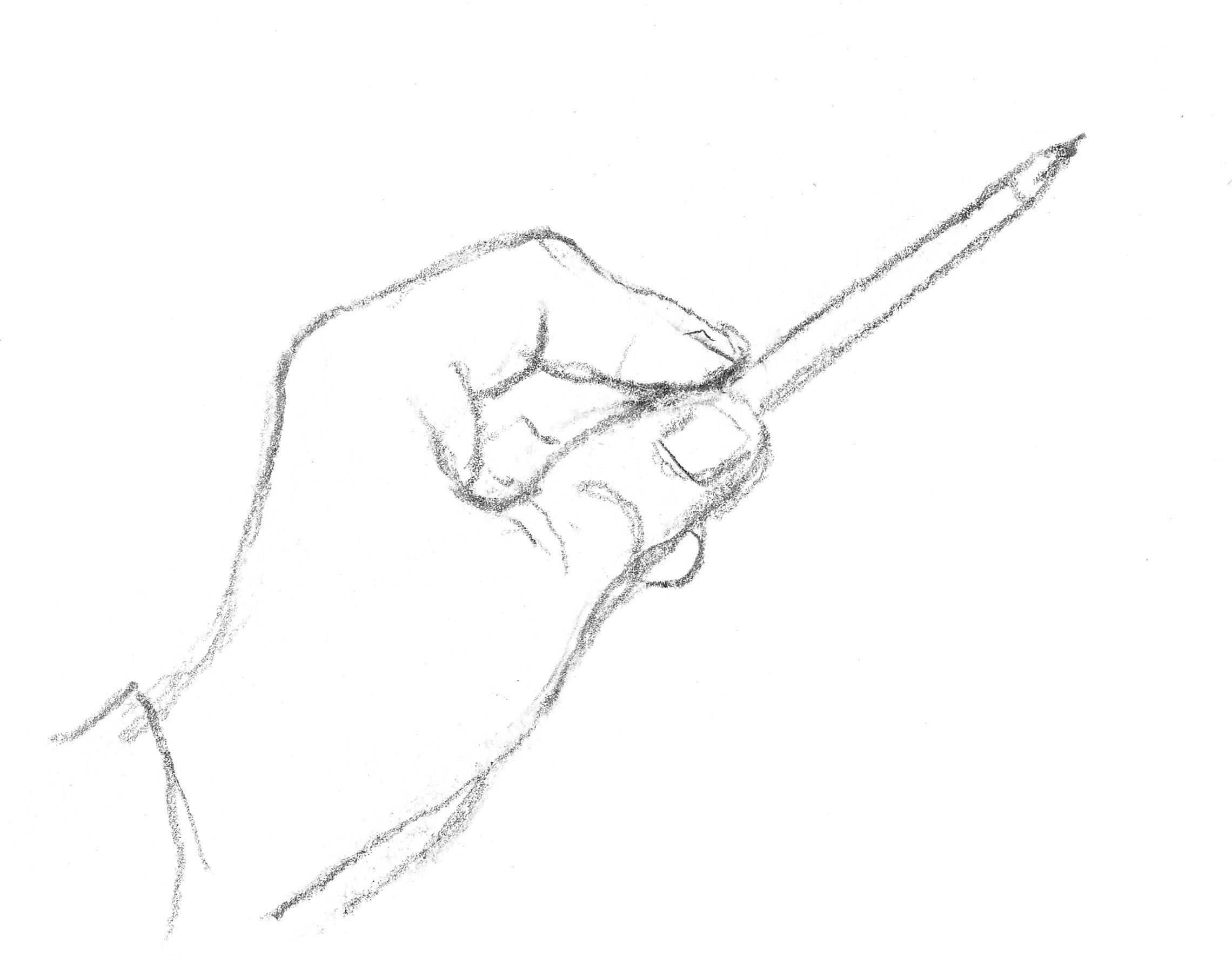
Suppose you are drawing a part of your environment. You may have difficulty estimating how oblique or straight a line or plane should be drawn. Artists then also use a trick which I will explain in three exercises:
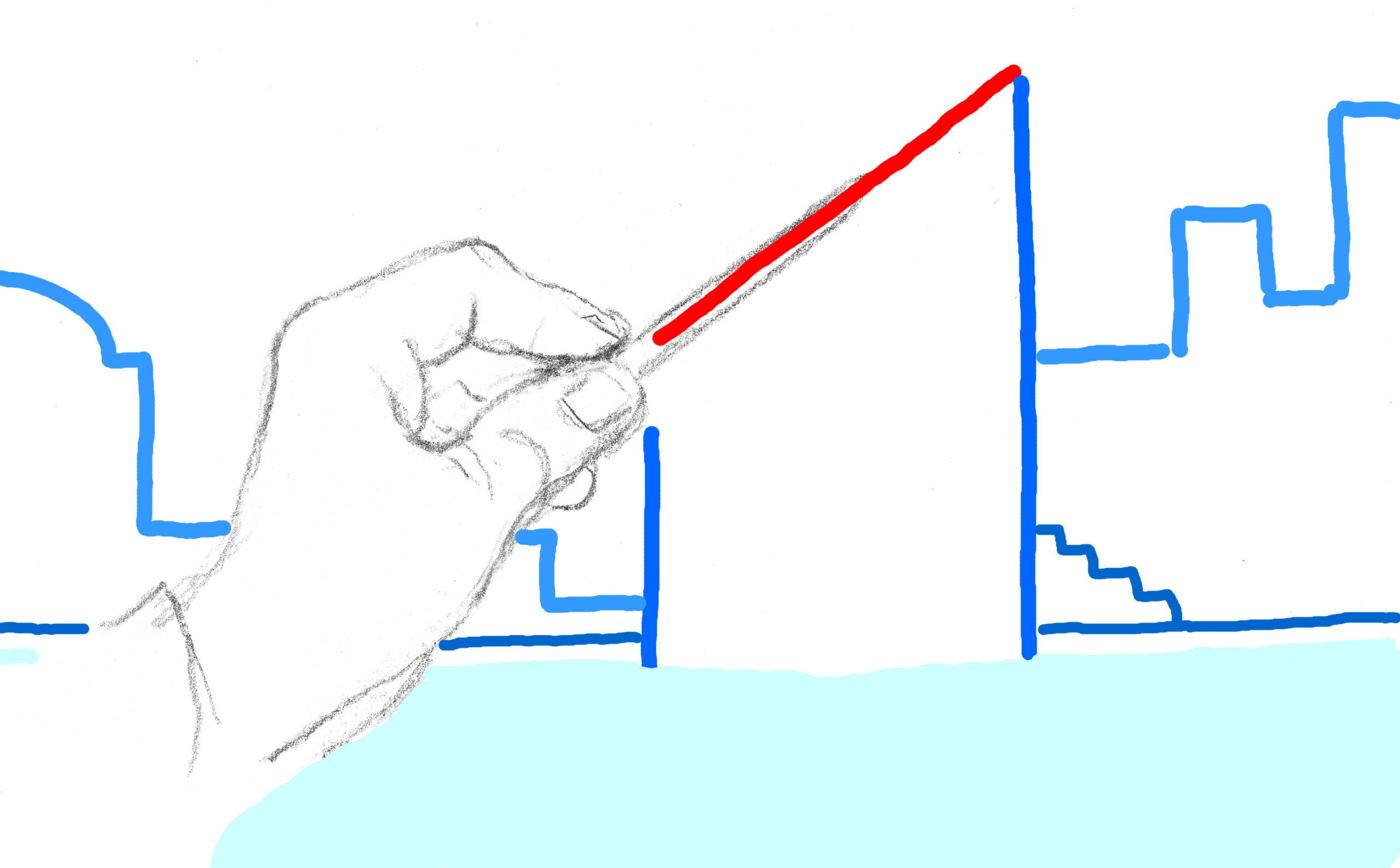
Exercise 1: Hold your arm out in front of you with the pencil exactly along the line you want to trace. Close one eye and look at the position of your pencil (image). The direction of your pencil determines how slanted you should draw the line on your paper. In my example I’m checking the slope of a building’s roof. Check it out with objects in your environment. You don’t have to draw anything, just look
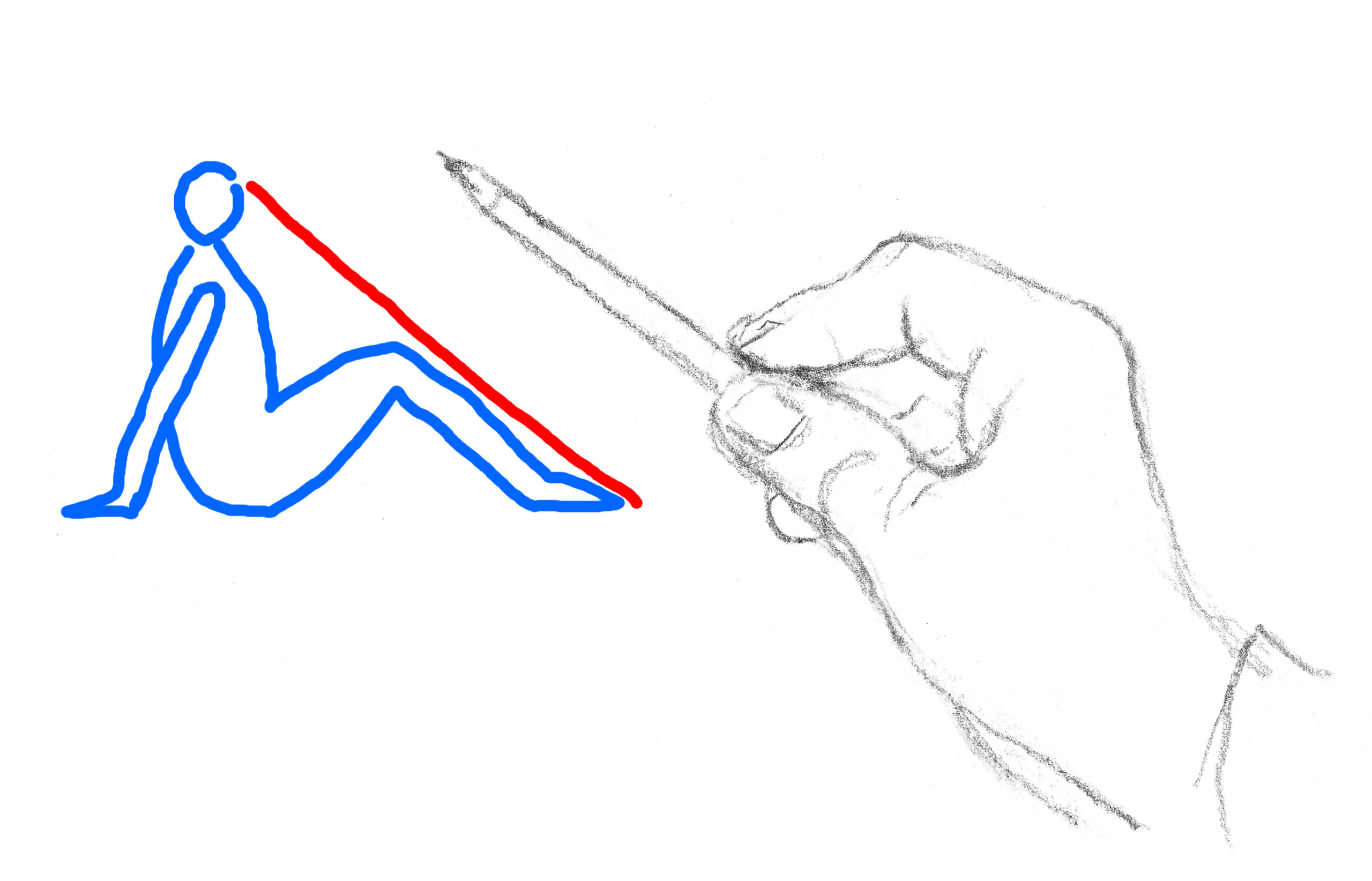
Exercise 2: Guidelines (or auxiliary lines or construction lines) also allow you to estimate the position of body parts or other objects relative to each other. You don’t always need to draw guide lines, as long as you can visualize them. Try it out with subjects in your environment.
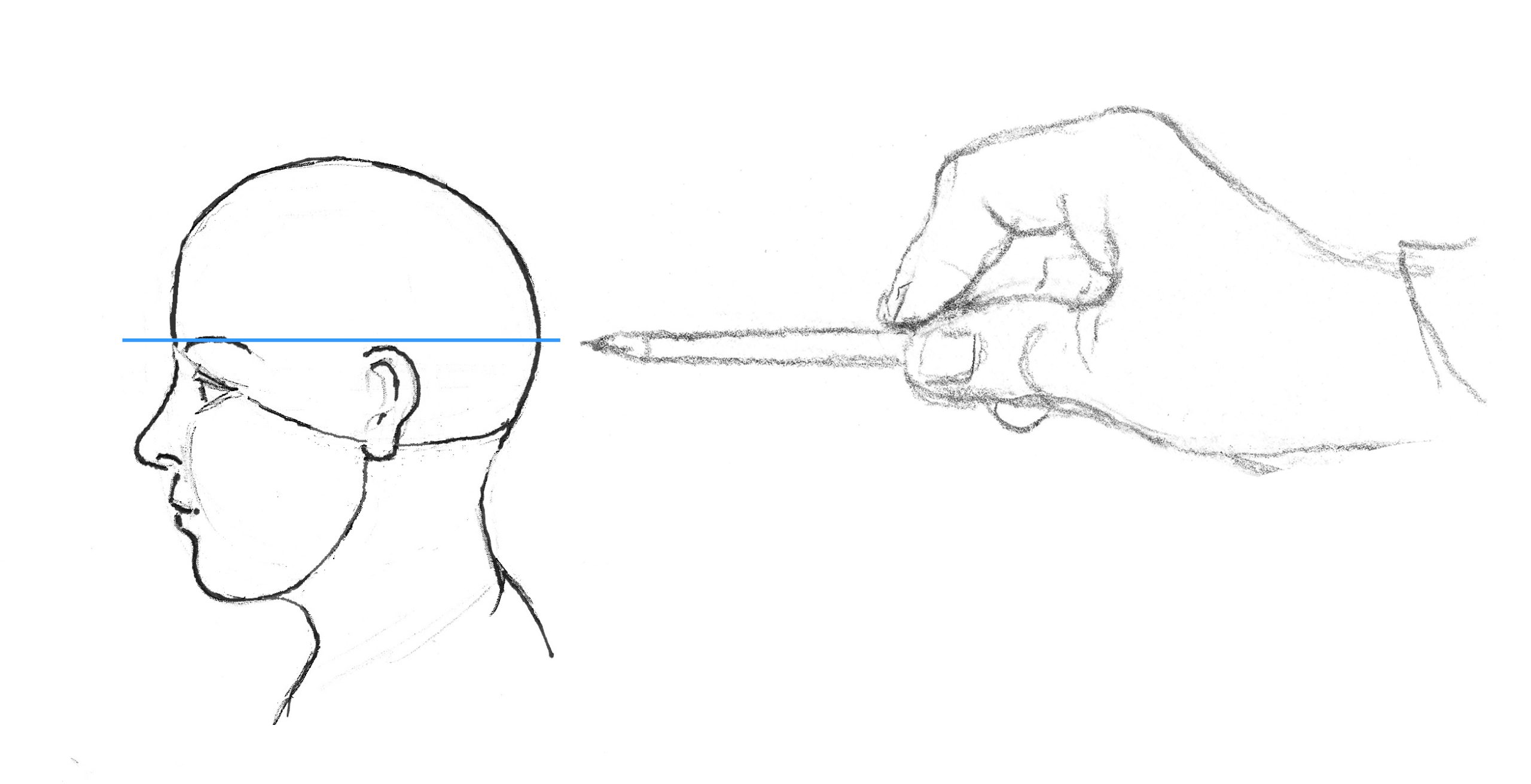
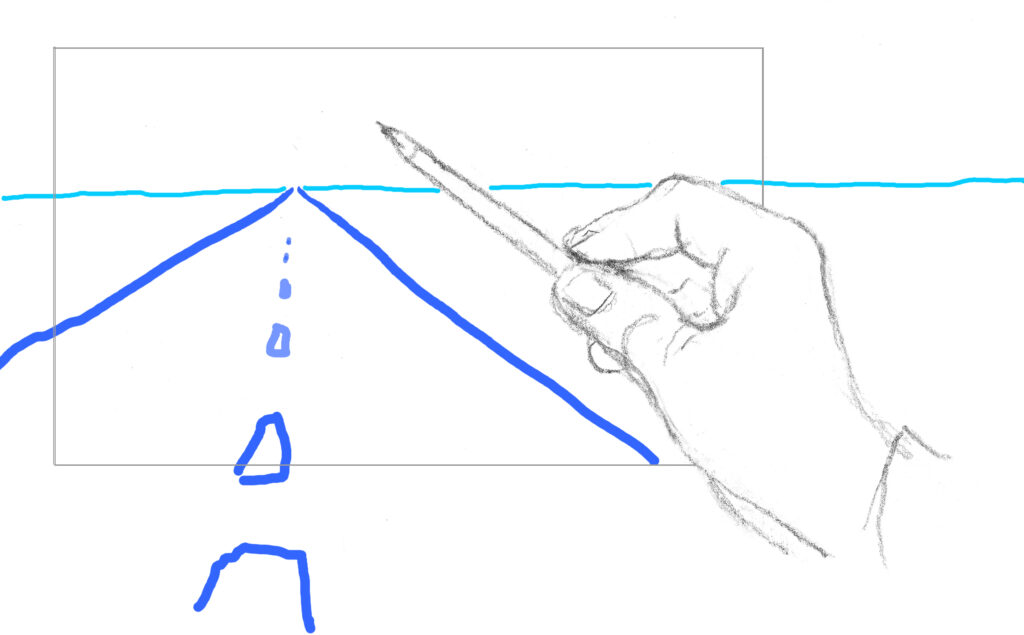
Exercise 3: the trick is above all super useful with (perspective) construction lines that run away from you in the distance, such as the lines of a street. Make sure your pencil tip is not pointing into the distance. Always hold your pencil parallel to an imaginary sheet of glass between you and the subject. Check it out with perspective lines in your environment. You don’t have to draw anything, just look.