Chapter 7 | SKETCHING
It’s wonderful to be able to sketch something from your environment or from your imagination. In sketches you can quickly jot something down, mess around, scribble, slip, smudge and change endlessly.
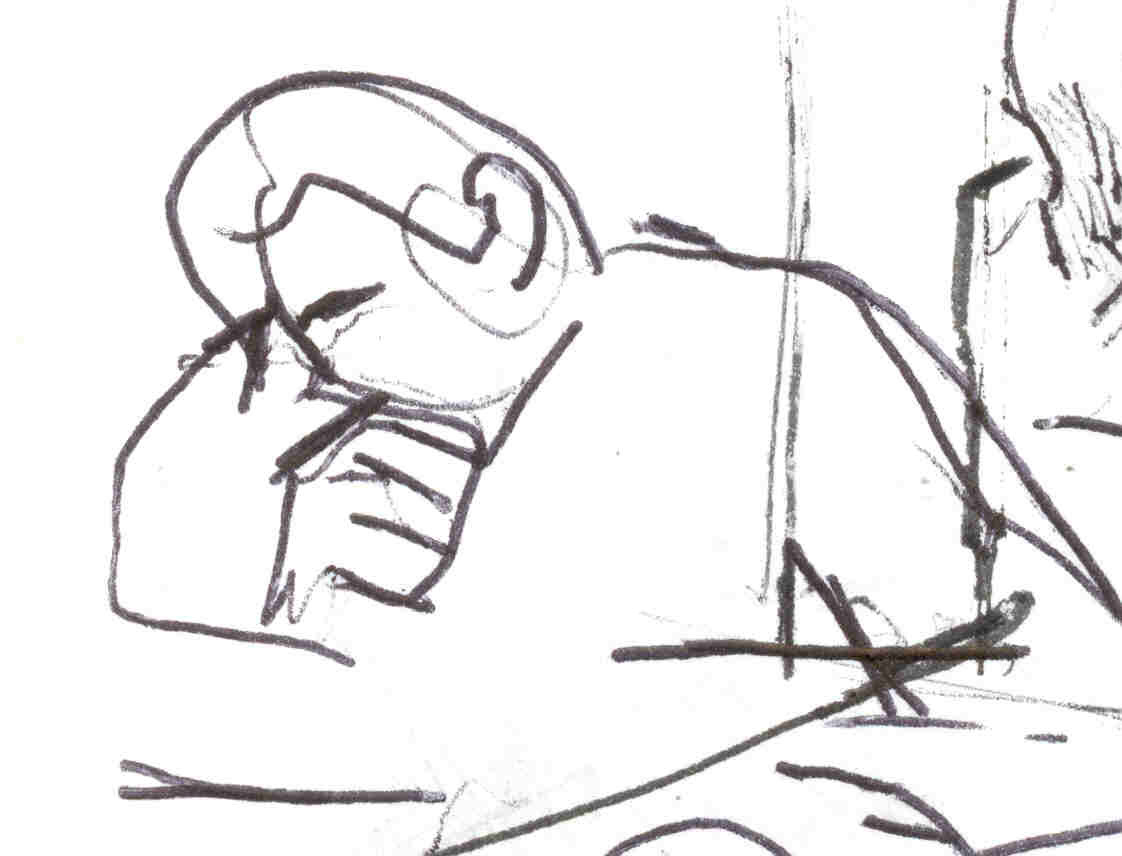
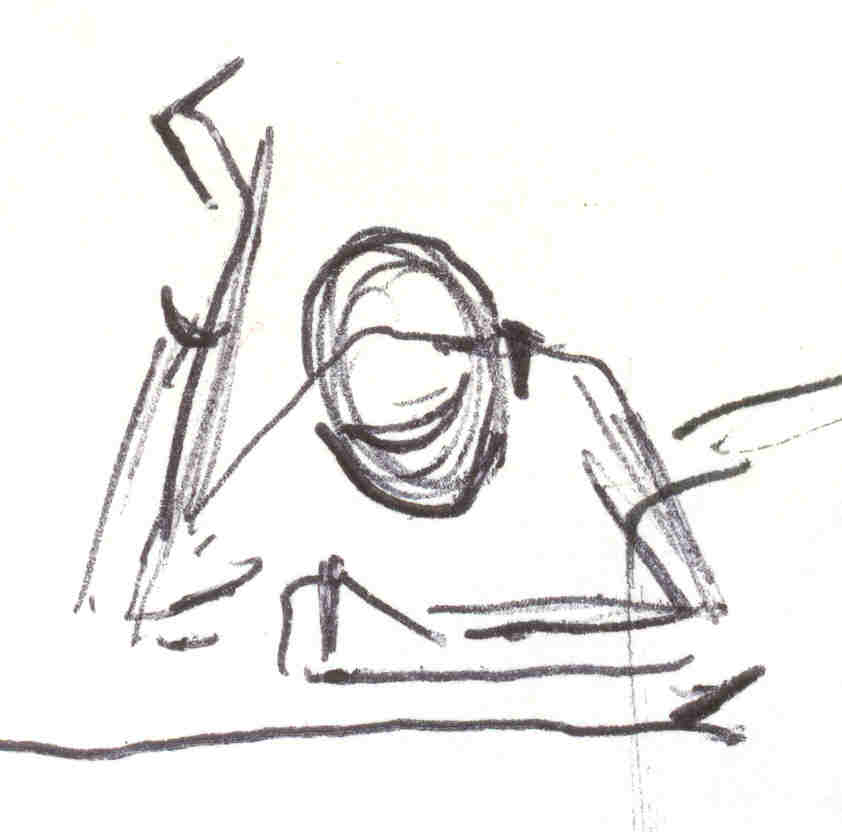
Sketches, for example of your surroundings, can consist of just a few lines, like my sketches of students taking a test…
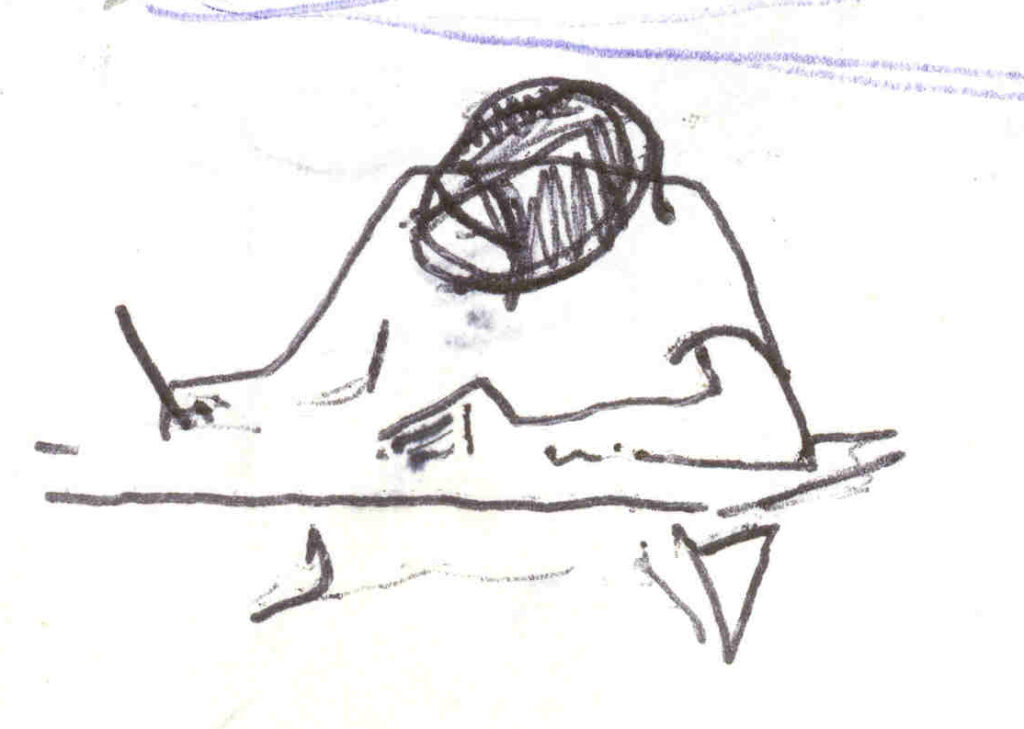
…or a lot of scribbles, such as a girl leaning on a table and a mother with her child at the airport.
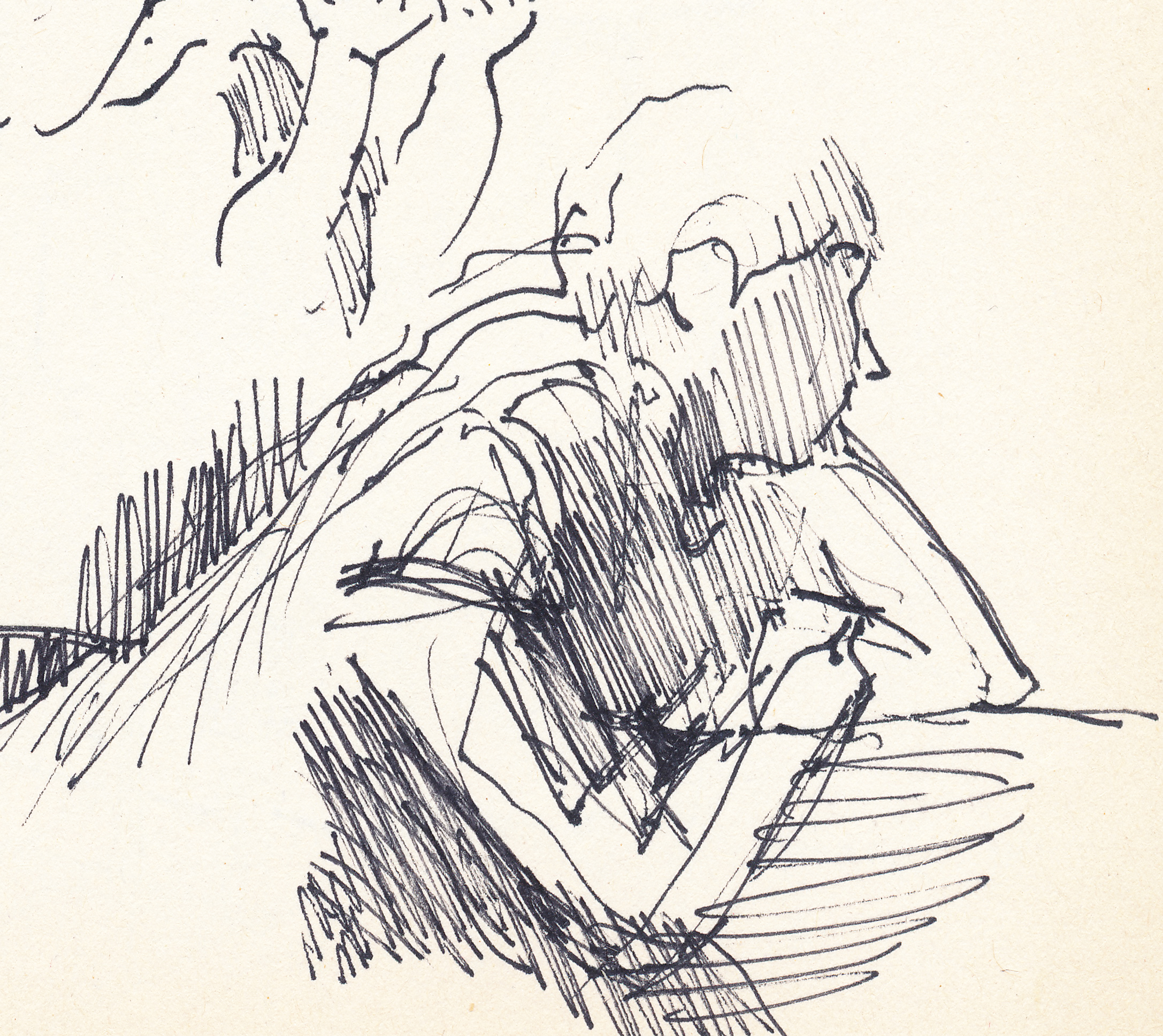
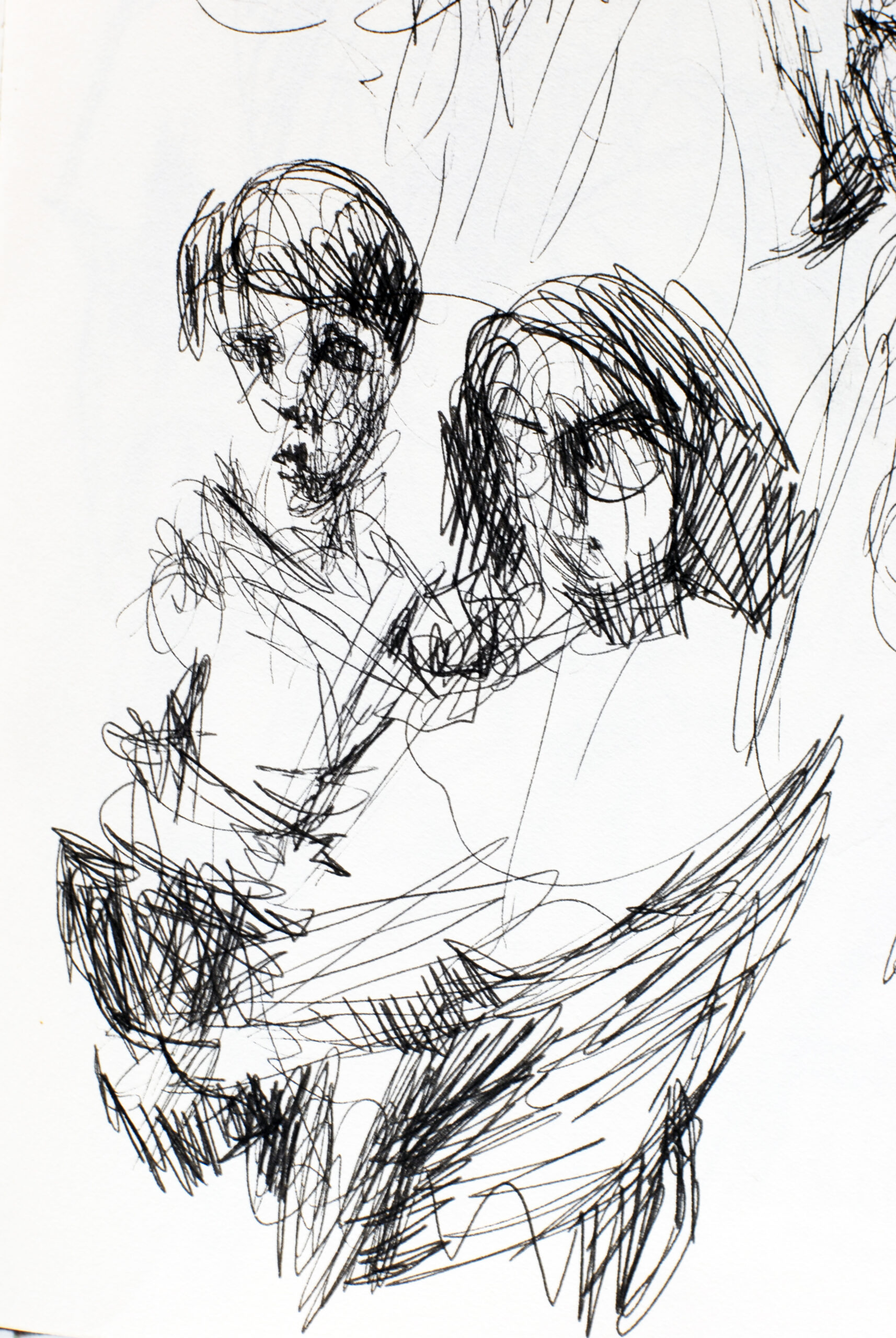
For sketching, it feels nice to draw more freely without worrying about a final result. The following exercises are experiments to try this out.
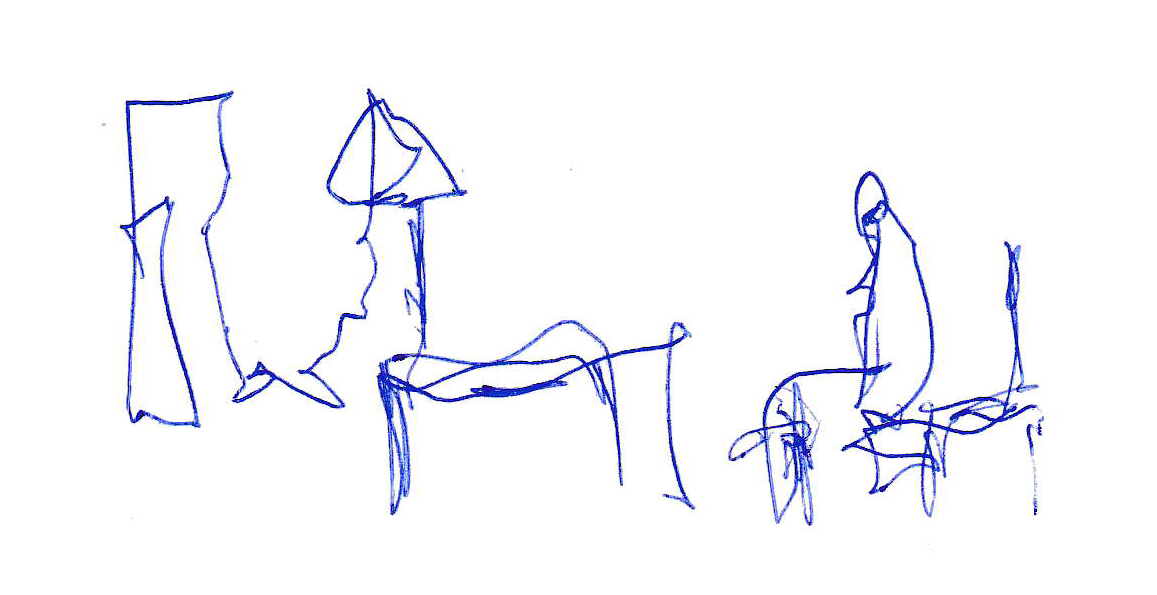
Exercise 1: With your eyes closed, draw a chair – a person sitting on it – a table – a table lamp – and a door. Repeat this with the following elements: a cupboard – a rug – a bed – a person lying on the bed – a window. If you are together with someone, you can also give each other these kinds of little assignments.
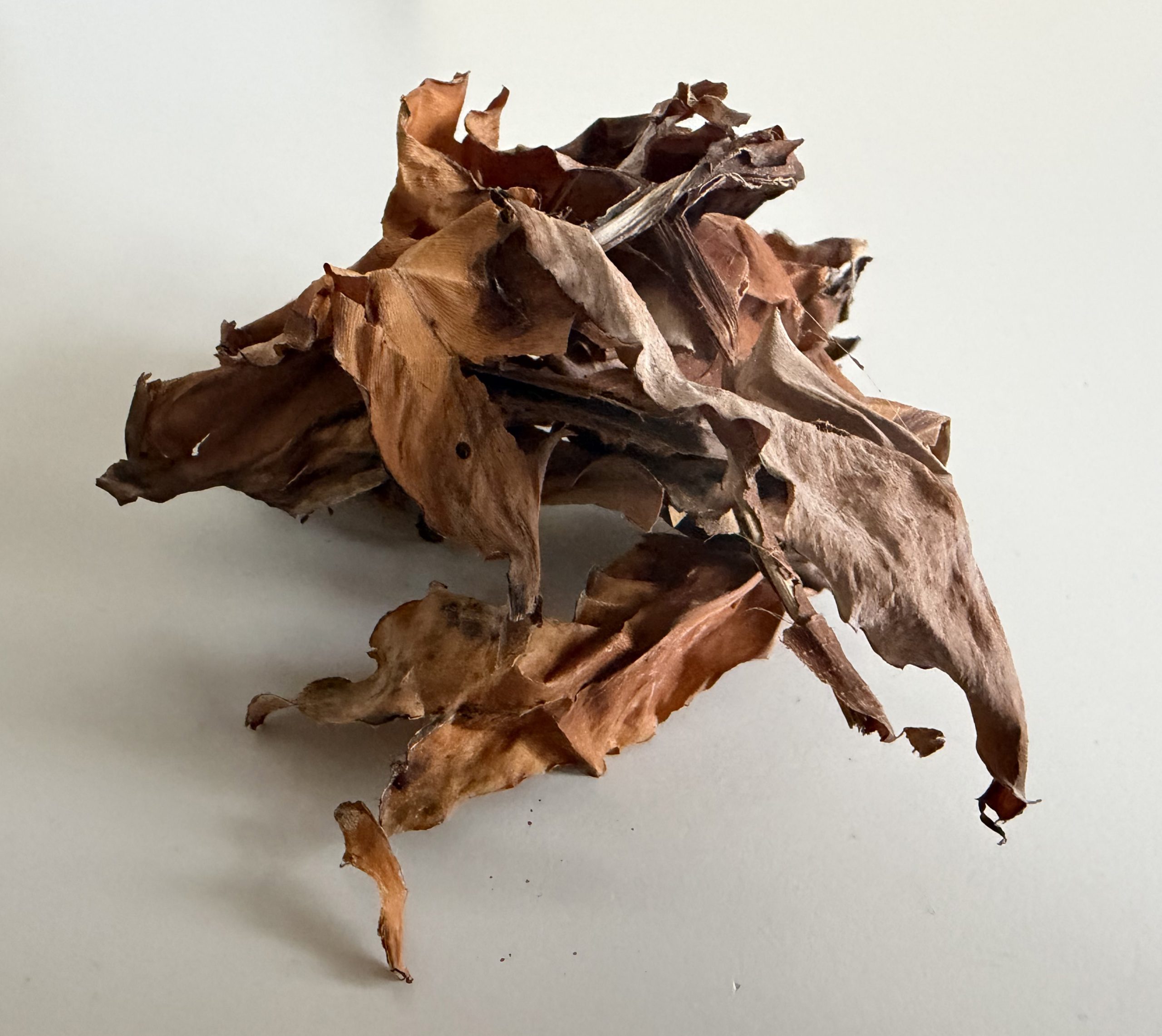
Exercise 2: Place a wad of paper in front of you or a crumpled group of leaves—anything that’s far too difficult/messy/unclear to draw accurately. Without looking too much at the paper, try to draw what you see in the form of shadows, shapes, and lines. Place the mini “still life” in a different position and repeat the exercise.
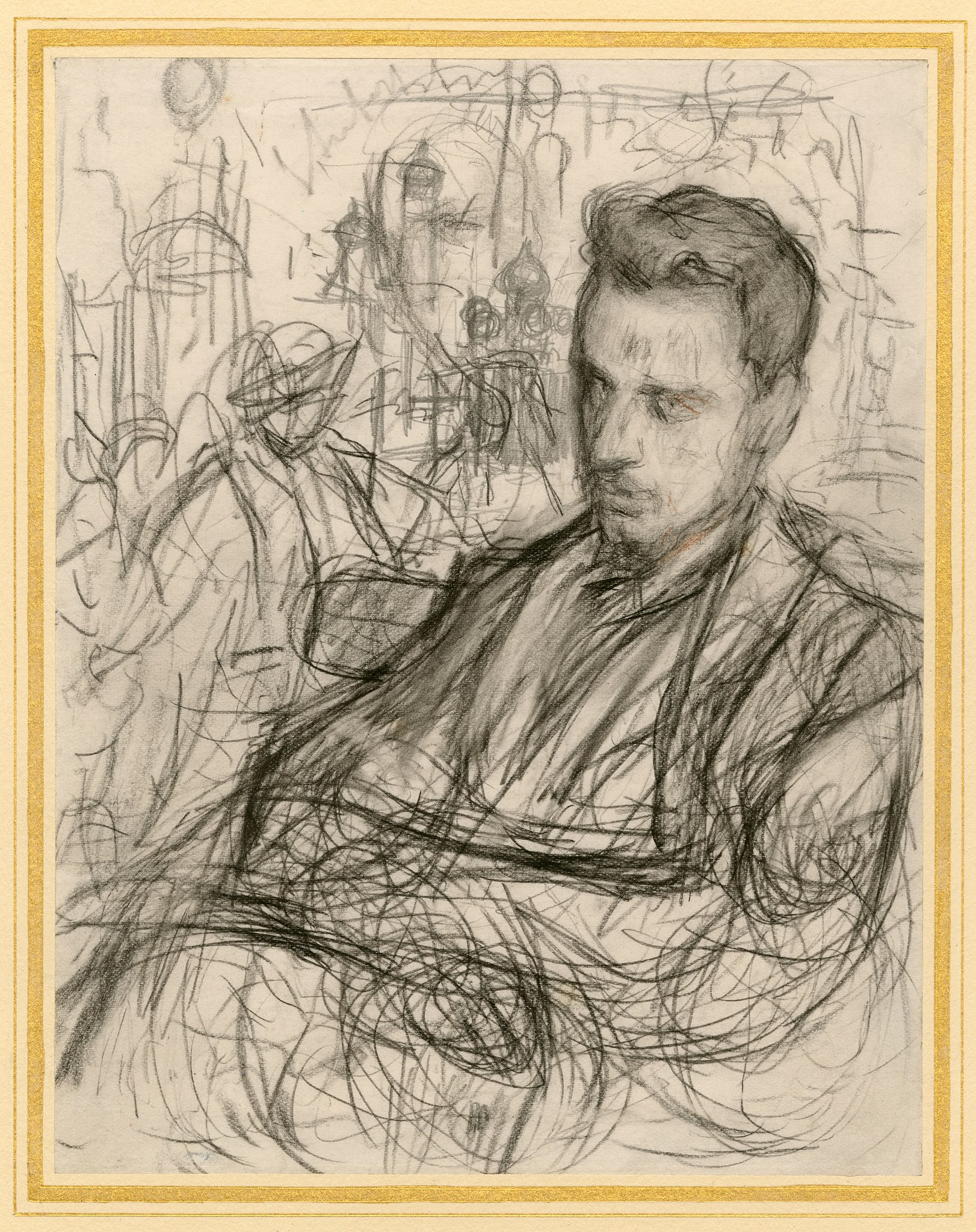
The greatest artists are usually masters of sketching. A striking example is a 1922 portrait of the poet Rilke by the Russian artist Leonid Pasternak. You can almost feel how his drawing hand was constantly moving. Only the head is rendered a little more delicate. Note all the scribbles around the figure. Sketches don’t have to be perfectly finished drawings. Pasternak used the sketch as a preparatory work for a painting.
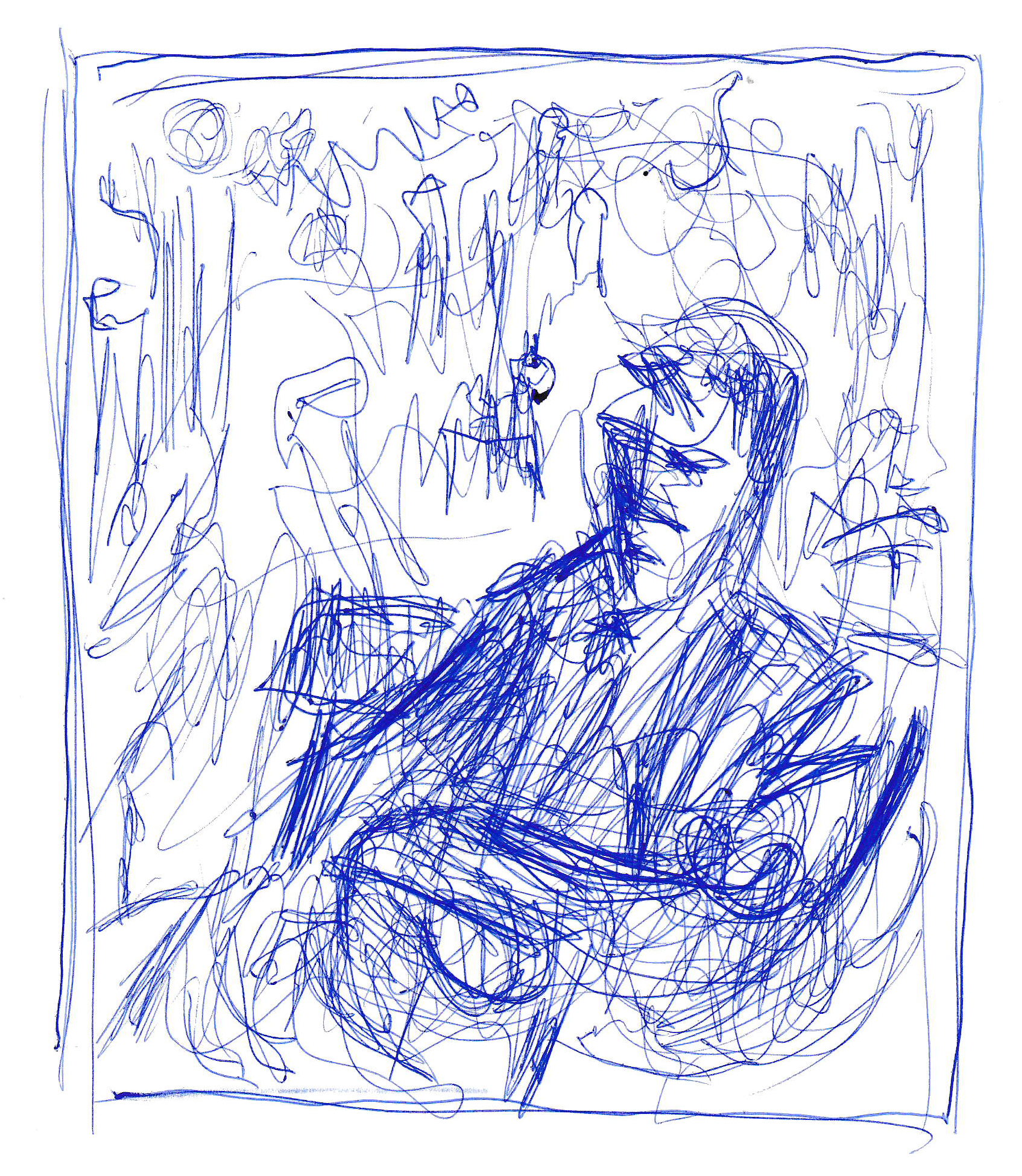
Exercise 3: Draw a frame with roughly the same proportions. Make your own sketch of Pasternak’s drawing in 5 minutes or less. It’s impossible to copy it exactly, so don’t worry about that! Try to imitate the loose way of sketching, alternating between light and dark. For larger formats, I recommend charcoal or Siberian chalk.
EXTRA: In a sketchbook/dummy, make small sketches of your surroundings, indoors or outdoors. Use a 2B pencil, fineliner, or another medium you find easy to use. The more you sketch, the more natural it will feel.
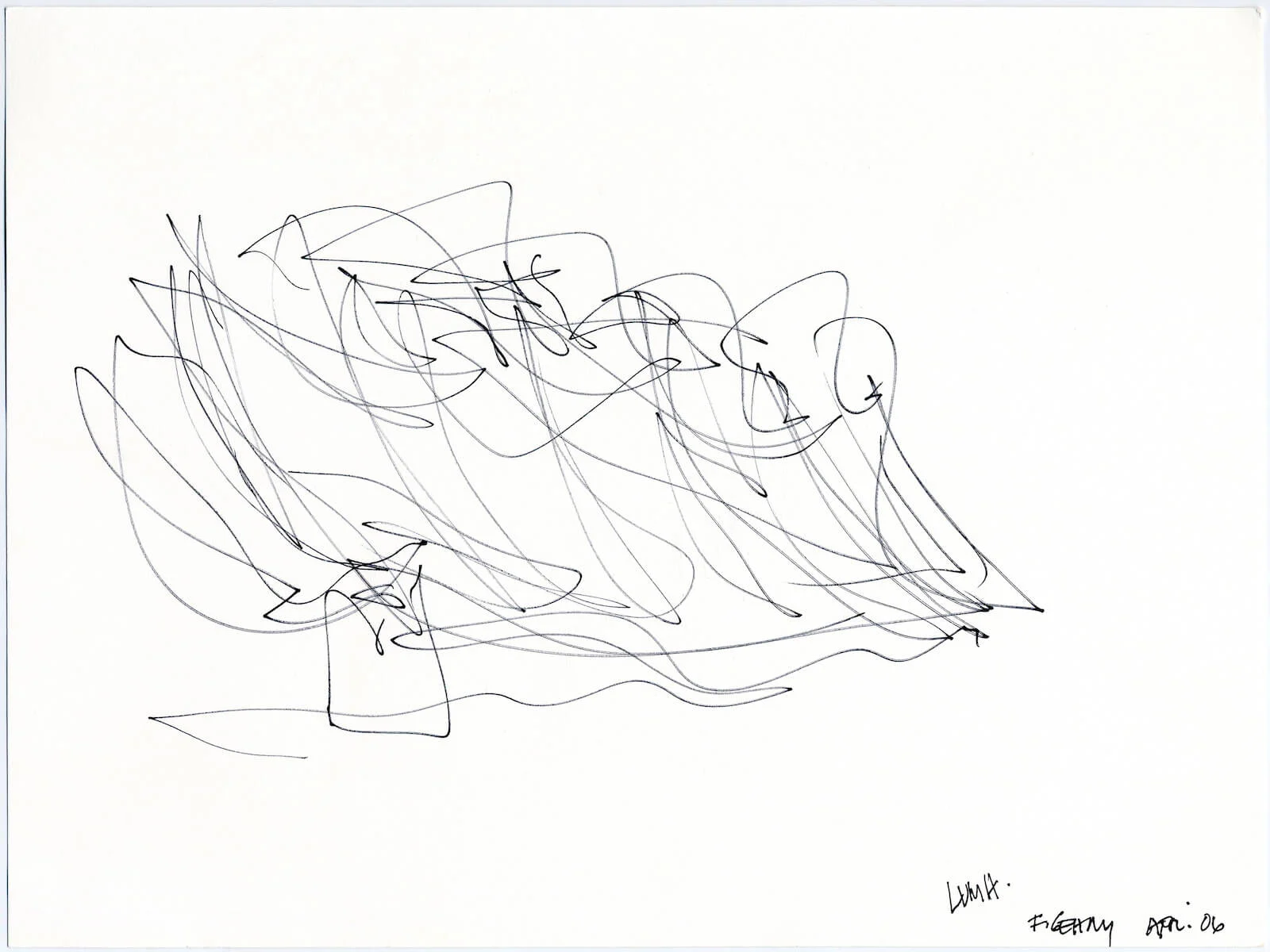
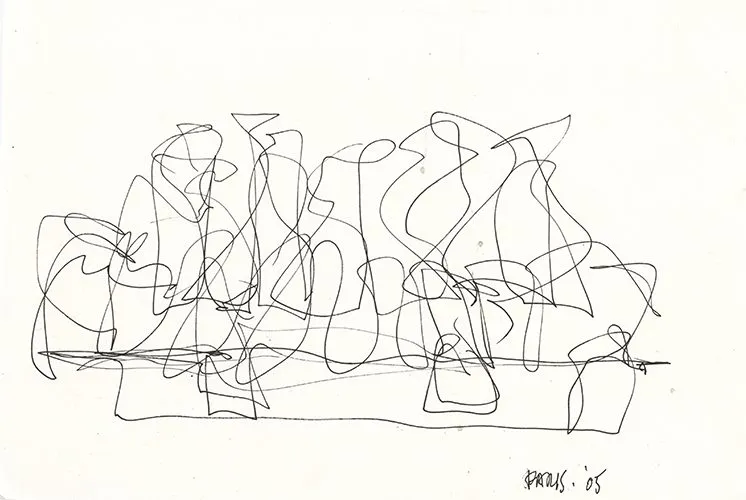
Finally, looking at the next two scribbled sketches, you probably wouldn’t guess they are the very first steps in the design of a spectacular high-tech museum in a large park in Paris.