CHAPTER 5 | WORKS OF ART
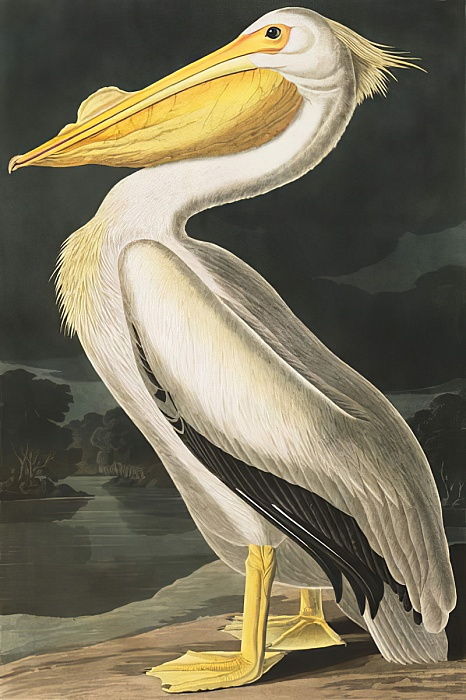
MASTERPIECE 1: THE PELICAN
The 19th-century Haitian artist John James Audubon made studies of birds in their natural habitat, in the forest, on the prairie and on river boat trips. He was also a forest ranger and even shot animals to stuff and study them, such as this delicately painted pelican. Yet Audubon was strongly against hunting for the thrill! Because of his painted catalogue of birds he can be seen as one of the founders of nature conservation. Some of the birds he painted are now extinct. Nowadays you can of course find stuffed animals such as the pelican he painted in natural history museums such as in Rotterdam and Leiden.
MASTERPIECE 2: The big fish eat the little fish
This drawing by Pieter Brueghel is about the proverb ‘Big fish eat small ones’. A man in a boat points out the gigantic dead fish to his child. A fisherman cuts open the fish’s belly with an enormous knife. Numerous smaller fish slither out of its mouth and stomach, which in turn have even smaller fish in their mouths.
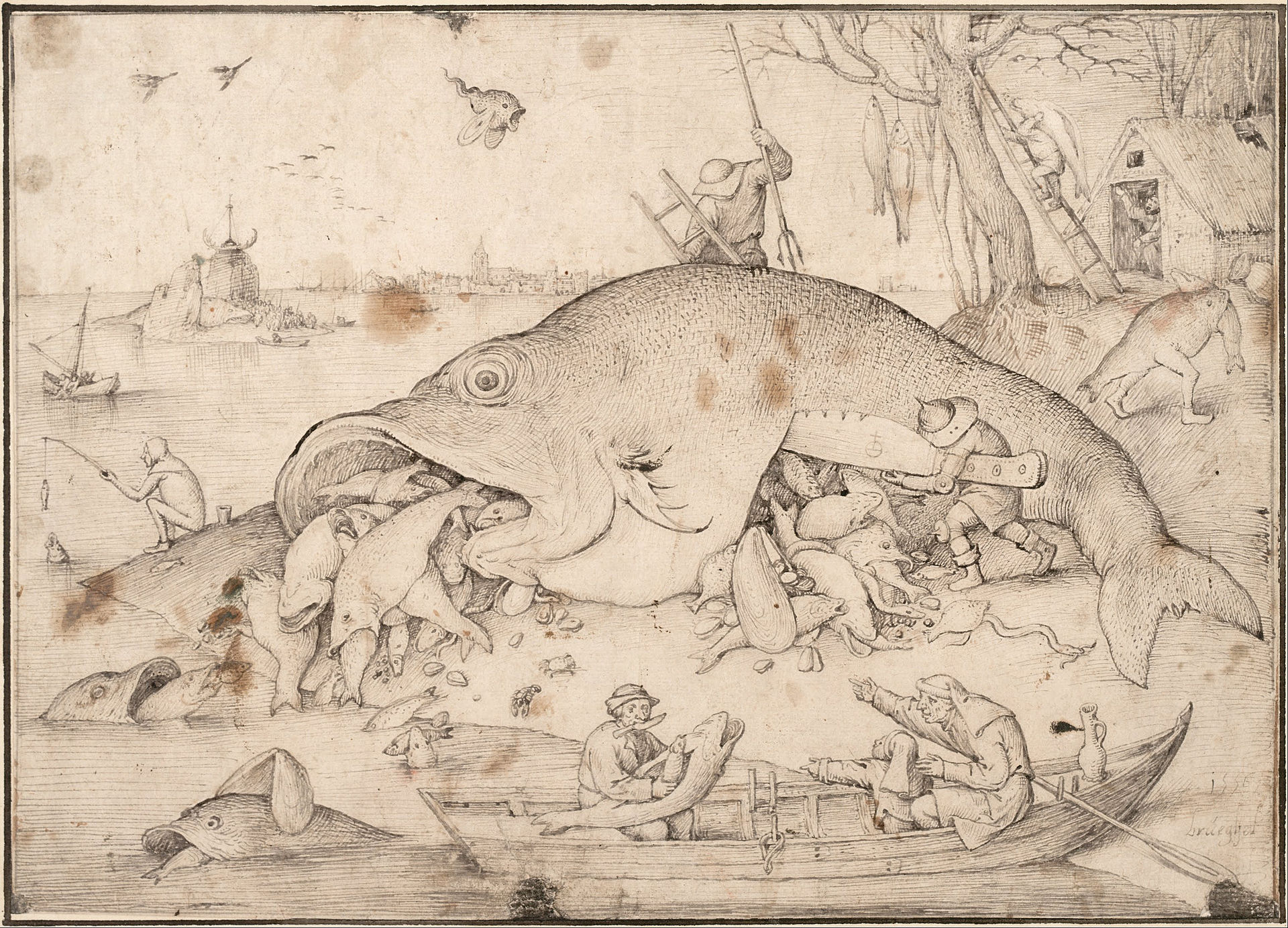
The man explains the meaning to the child: “Greedy fish are just like greedy people who exploit poor people. But greed leads nowhere. Just look at the biggest fish: he has eaten the most of everyone and he loses everything again.” The image refers to the Bible, which states that it is wrong for rich people to exploit poor people. There are funny ideas in the drawing, such as a fish with human legs on the right. He quickly walks away in the hope that no one steals the fish from his mouth.

In 1557, Pieter van der Heyden meticulously recreated the drawing and printed it using a copper engraving. The lines were first scratched very precisely into the metal and then filled with printer’s ink. The prints were mirrored as you can see. Engravings were THE way to reproduce images. To the right of the man and the child, van der Heyden added the Latin word “Ecce” which means “Look!”.
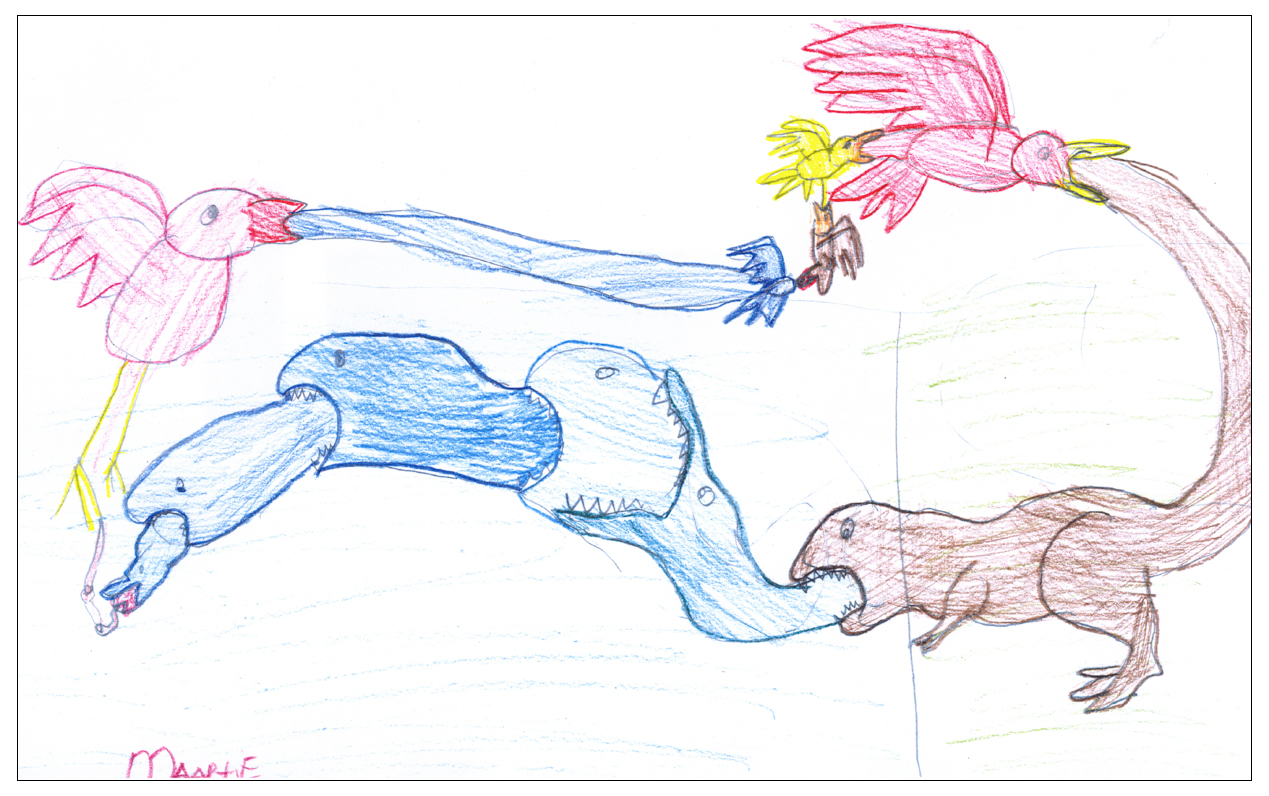
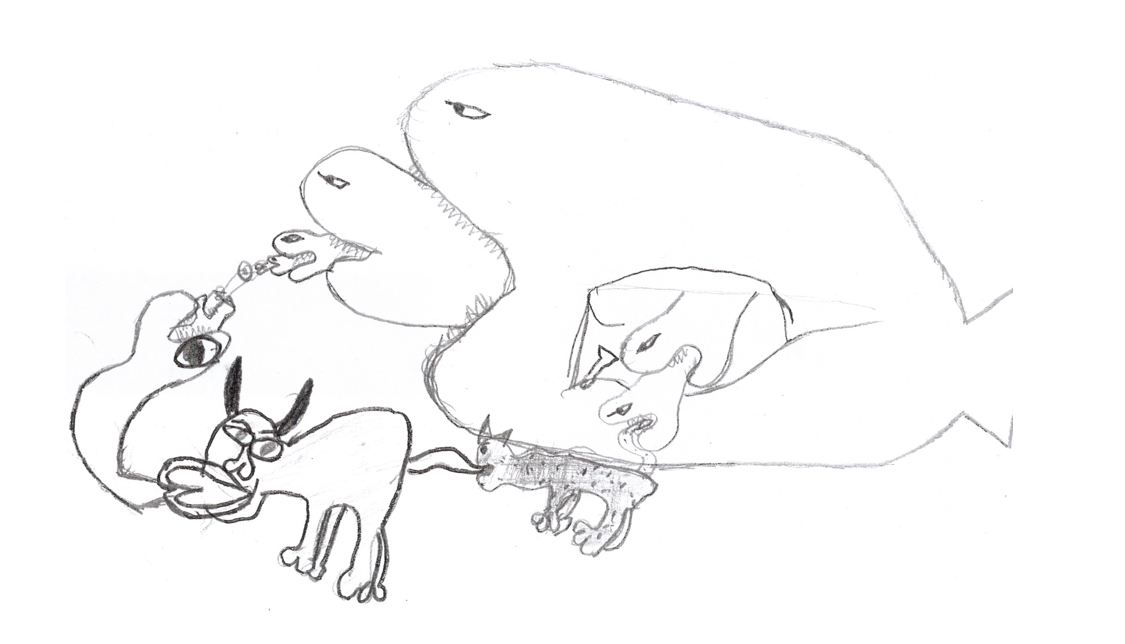
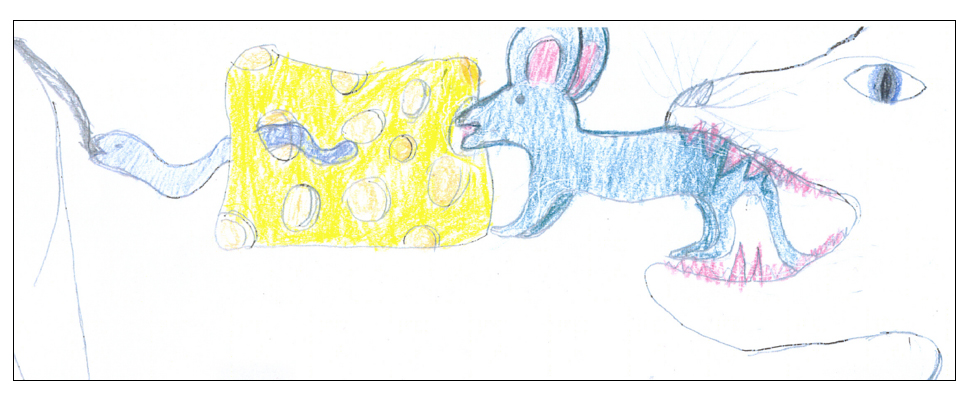
EXTRA: you might also want to try to draw how large creatures swallow smaller creatures. I will show you a few drawings by young students on this subject.
MASTERPIECE 3: THE KRAAK
A second example is ‘The Kraak’, a mythical creature of the ocean. It is an octopus that is so large that it can even attack entire ships. It appears in exciting stories such as ‘20,000 Leagues Under the Sea’ by Jules Verne, a book with beautiful engravings. In one of the engravings, a man is grabbed by one of the eight arms of the Kraak. Below you can see more engravings of the Kraak. Because the people and ships are drawn relatively small, the octopus becomes gigantic, just like the giant chicken at the beginning of this lesson. A Kraak also appears in the Disney film ‘Pirates of the Caribbean’ from 2006.
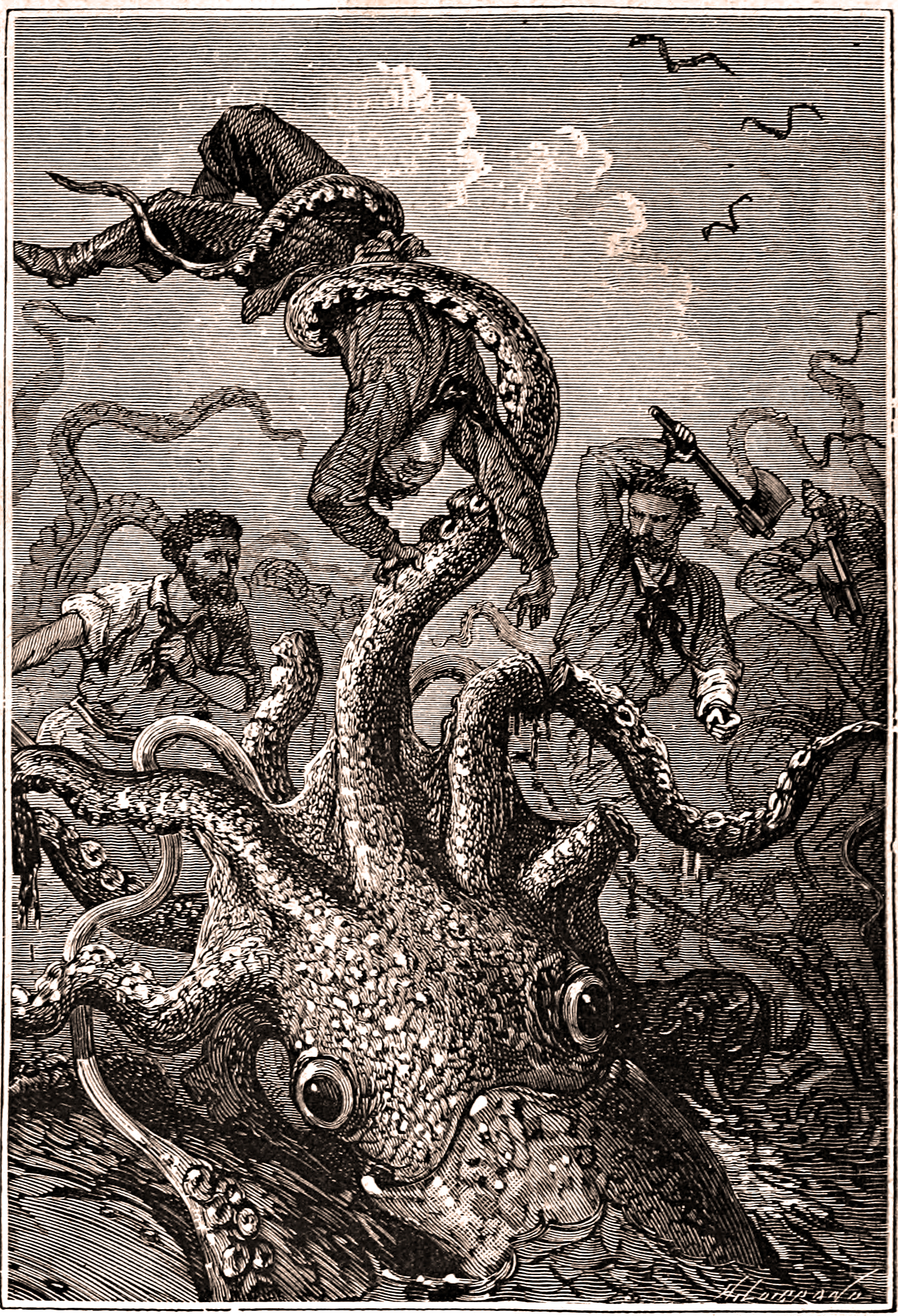
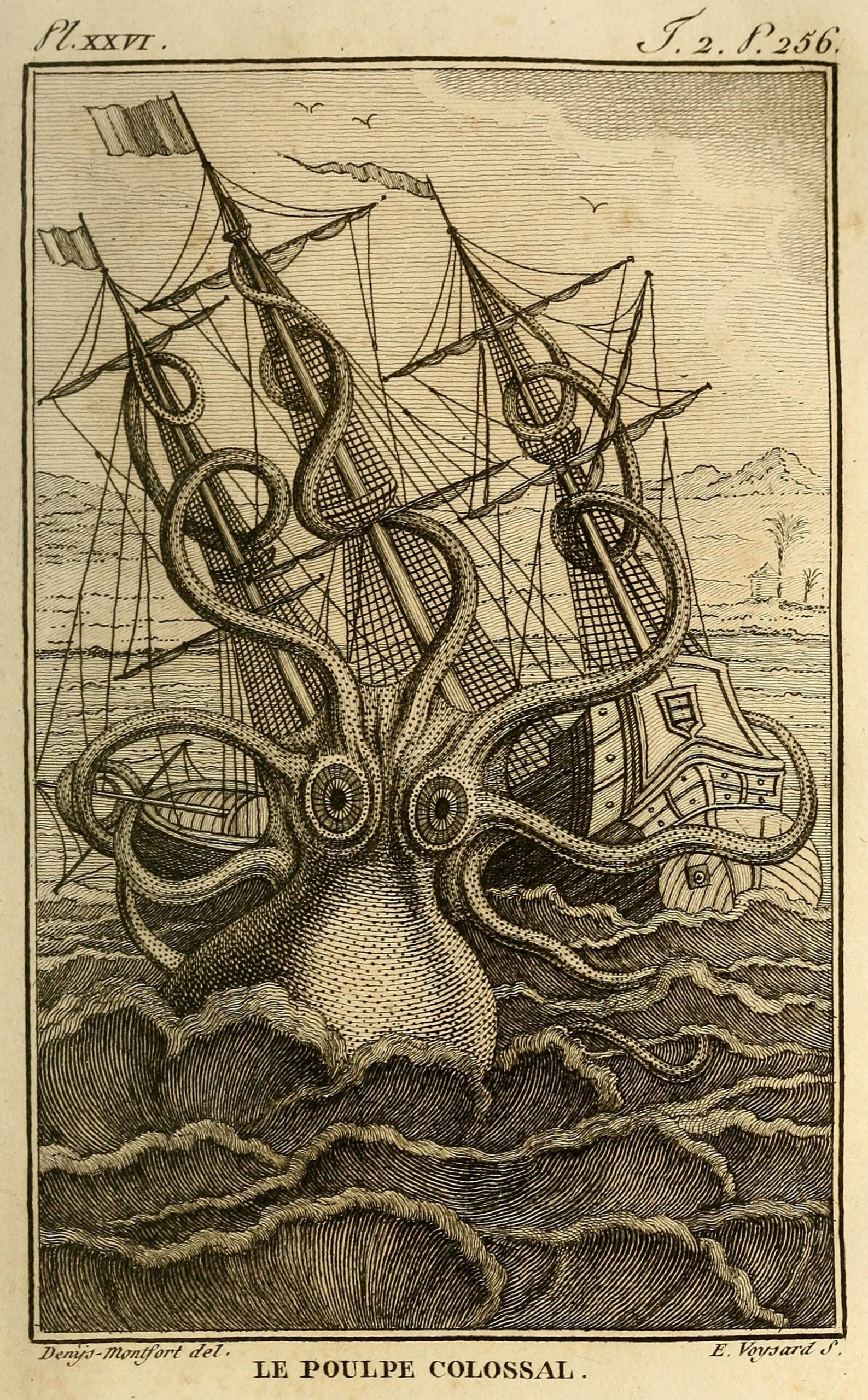
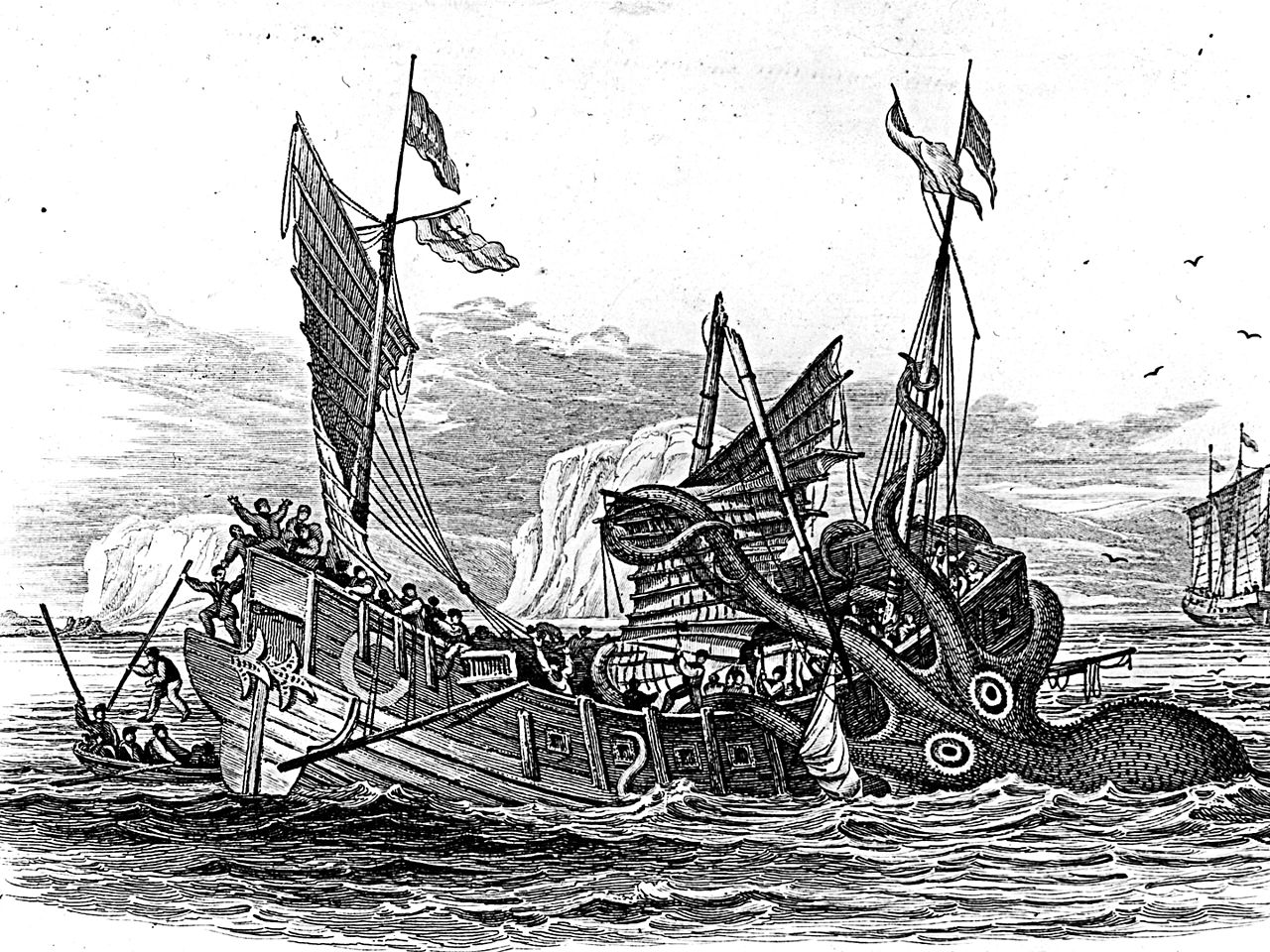
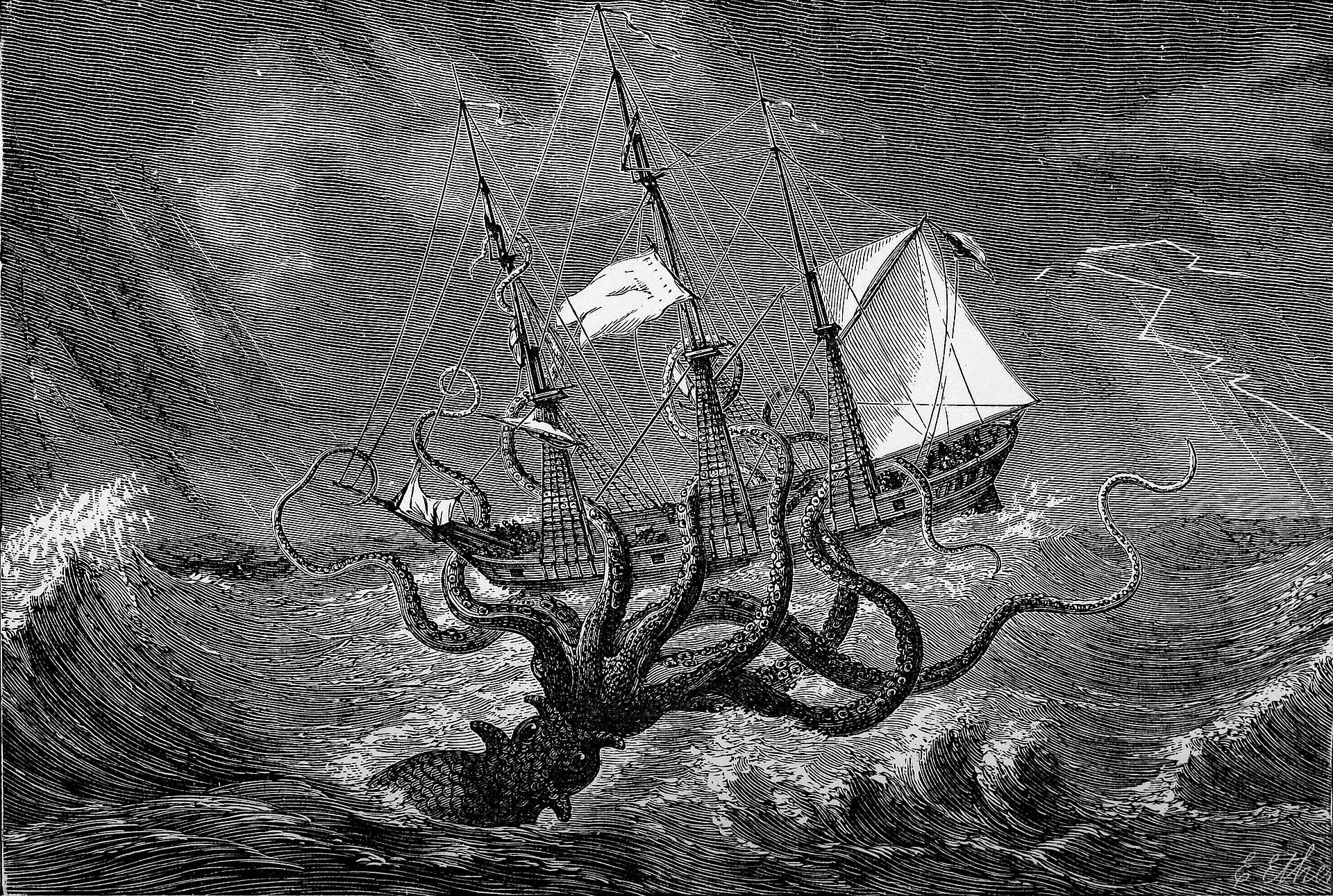
The engravings are made by Alphonse de Neuville, Pierre Denys de Montfort en Edgar Etherington.
If you also find these kinds of mythical animal monsters exciting, then Scylla and Charybdis are really something for you! They are two monsters from ‘The Odyssey’, a travel story from Greek mythology. The Dutch writer Imme Dros and English writer Stephen Fry have beautifully retold the story in ‘Greek myths’.
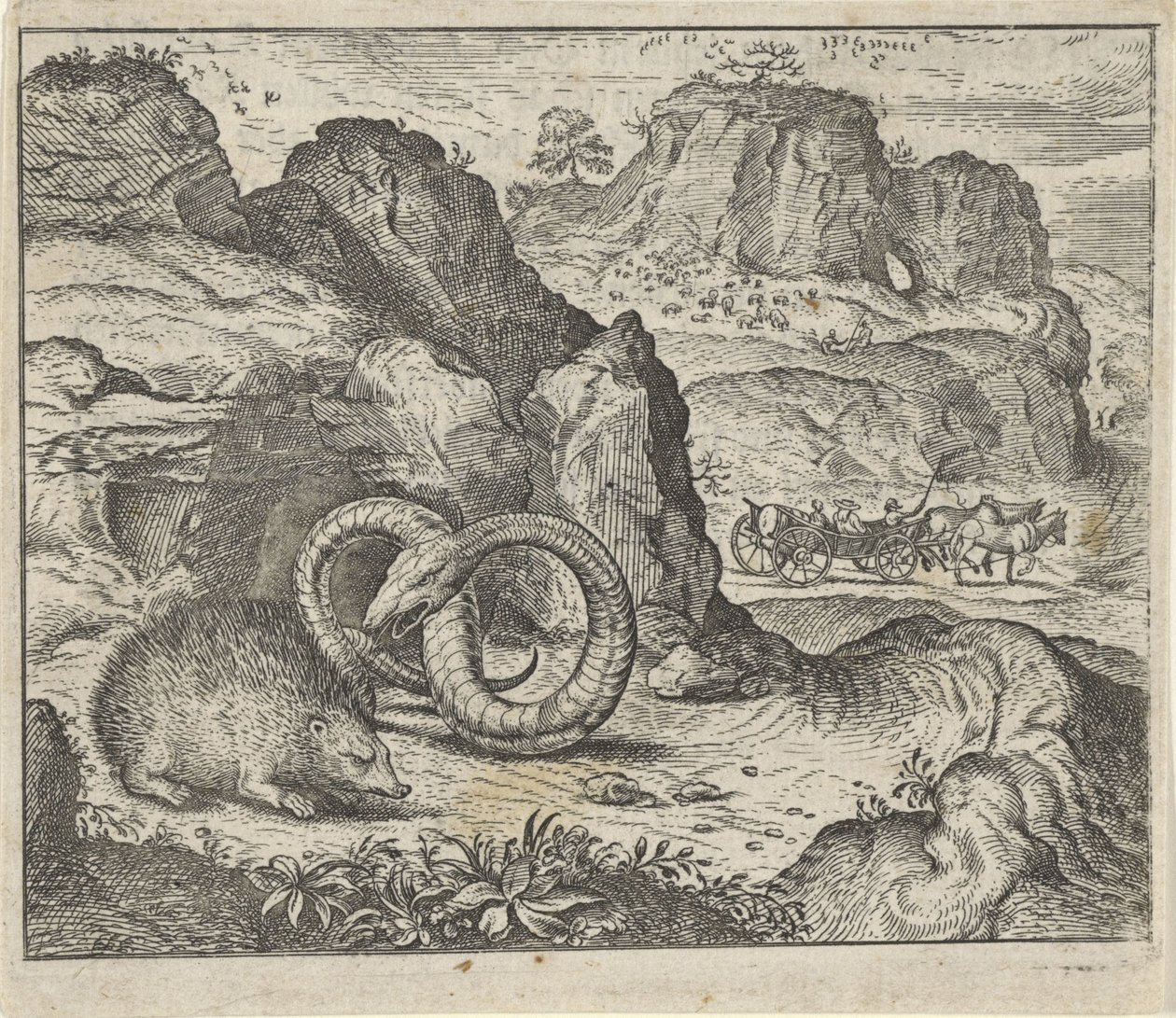
MASTERPIECE 3: The Fable of the Hedgehog and the Snake (see Chapter 2)
“A hedgehog asks a snake if he can use his burrow for the winter. The fable describes how the hedgehog’s spines disturb the snake’s hibernation. The moral of the story teaches us to be cautious with charity.”