CHAPTER 3 | EXPRESSIONS, PROVERBS AND FABLES
Expressions, proverbs and fables featuring animals are timeless.
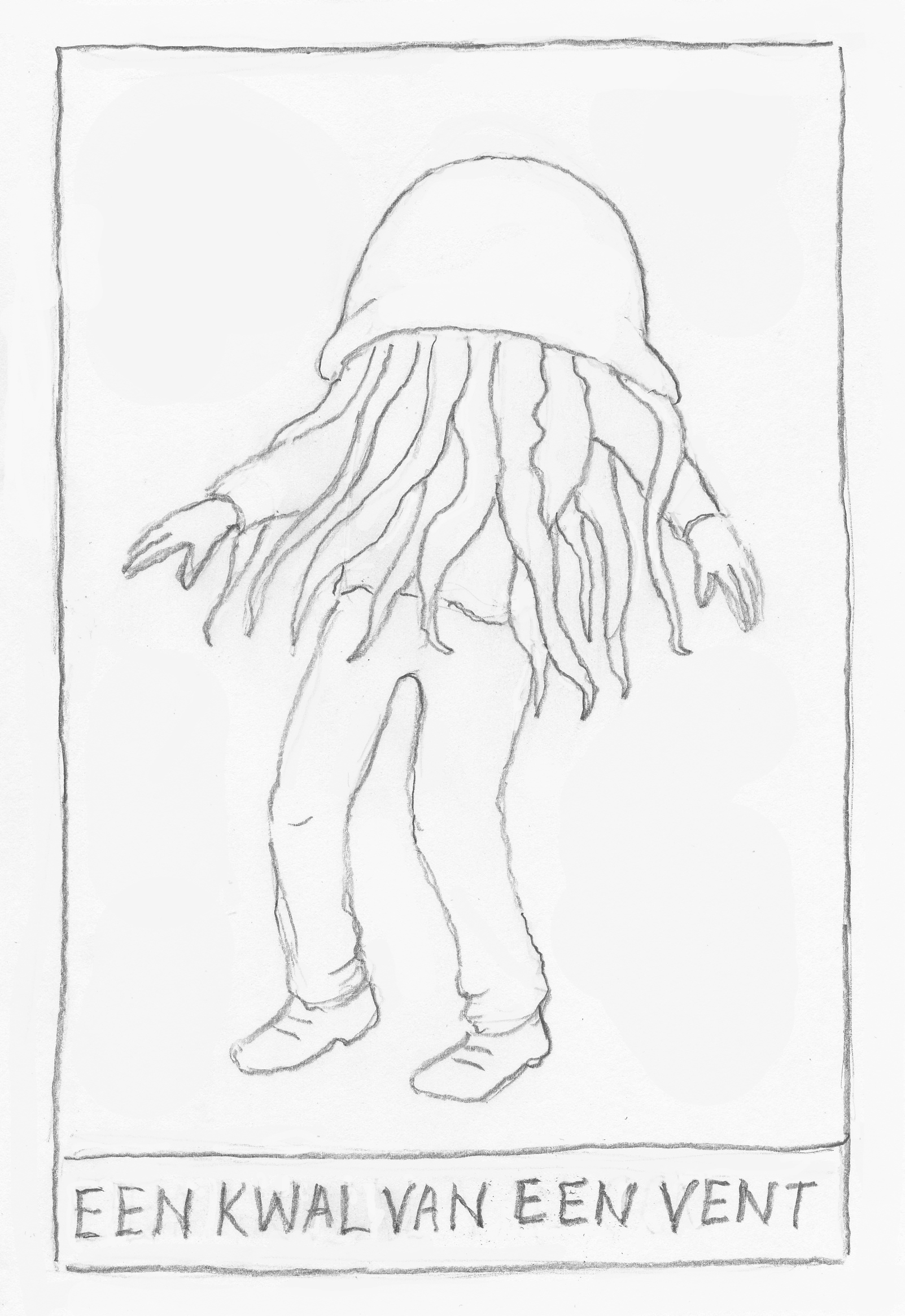
1.EXPRESSIONS
Exercise 1: in a square or circular frame, draw a picture about one of the following expressions involving an animal. If drawing the chosen animal is too difficult you can first trace an existing picture. Write the expression in clear letters below, above or around your drawing, in a bar or frame.
Proud as a peacock / Faithful as a dog / Strong as a bear / Cunning as a fox / Lazy as a pig / Stubborn as a donkey / As out of tune as a crow / So slow as a snail / Hold your horses! (stop, no rush!) / Holy cow! (I can’t believe what I see/hear/what’s happened here!) / Diligent as an ant.
If drawing the animal you have chosen is too difficult, you can also first trace a photo/existing image.
2.PROVERBS
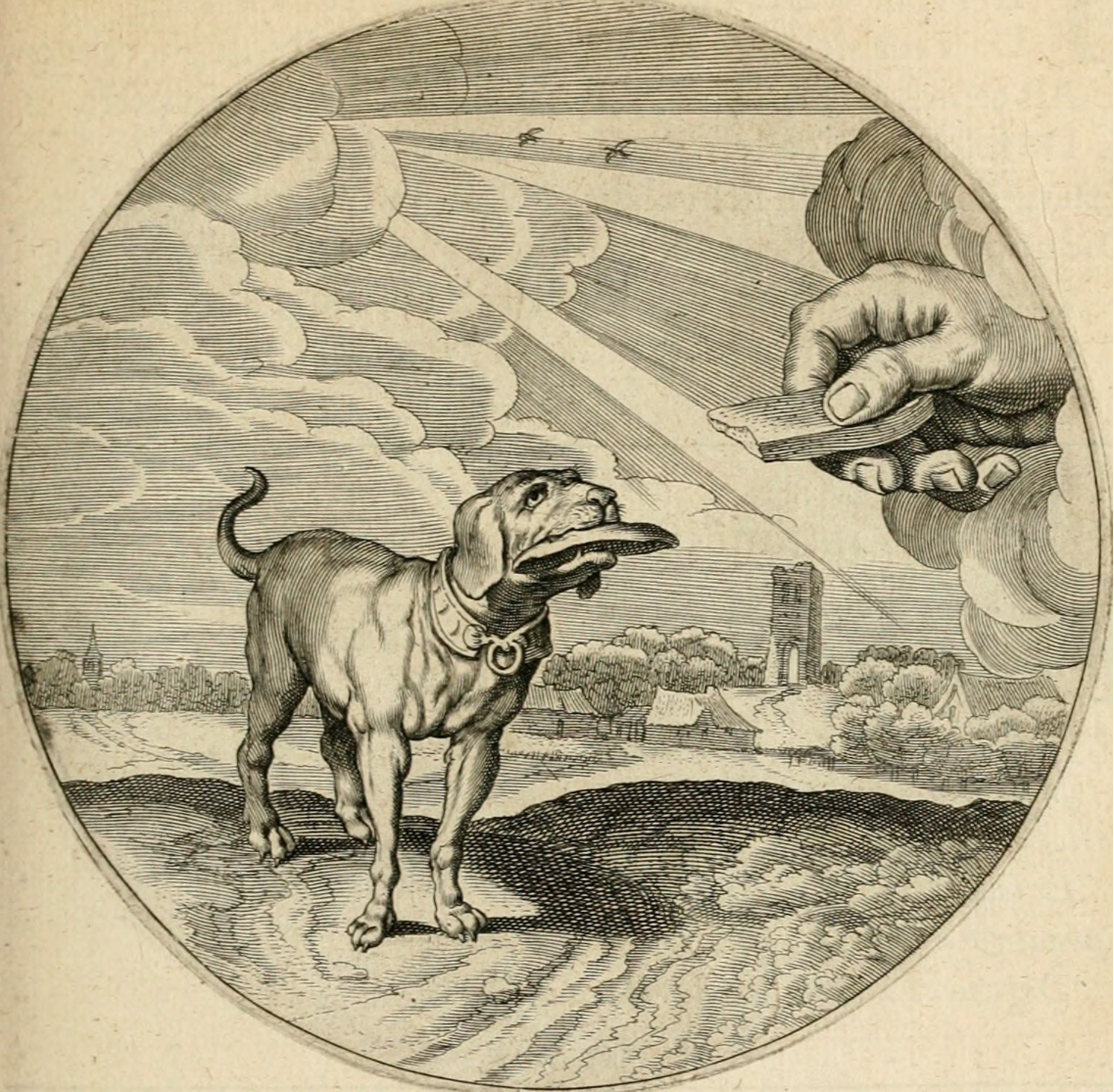
Emblemata are small moralistic drawings or engravings, usually in a square or circular frame (moralistic: intended as a life lesson). They were extremely popular in the 17th century. A striking example is the engraving by Adriaen van der Venne from a book by Jacob Cats. This emblem is about the Latin proverb ‘Rex Immoderata cupido est’, or ‘Desire is greedy’: About people who always want more, even though they already have more than enough money or power. They become slaves to their desires; greed has become their king.In the picture, this greed is depicted by a dog whose mouth is full of meat but who is already longing for a new piece of meat that is held out to him by a hand from a cloud.
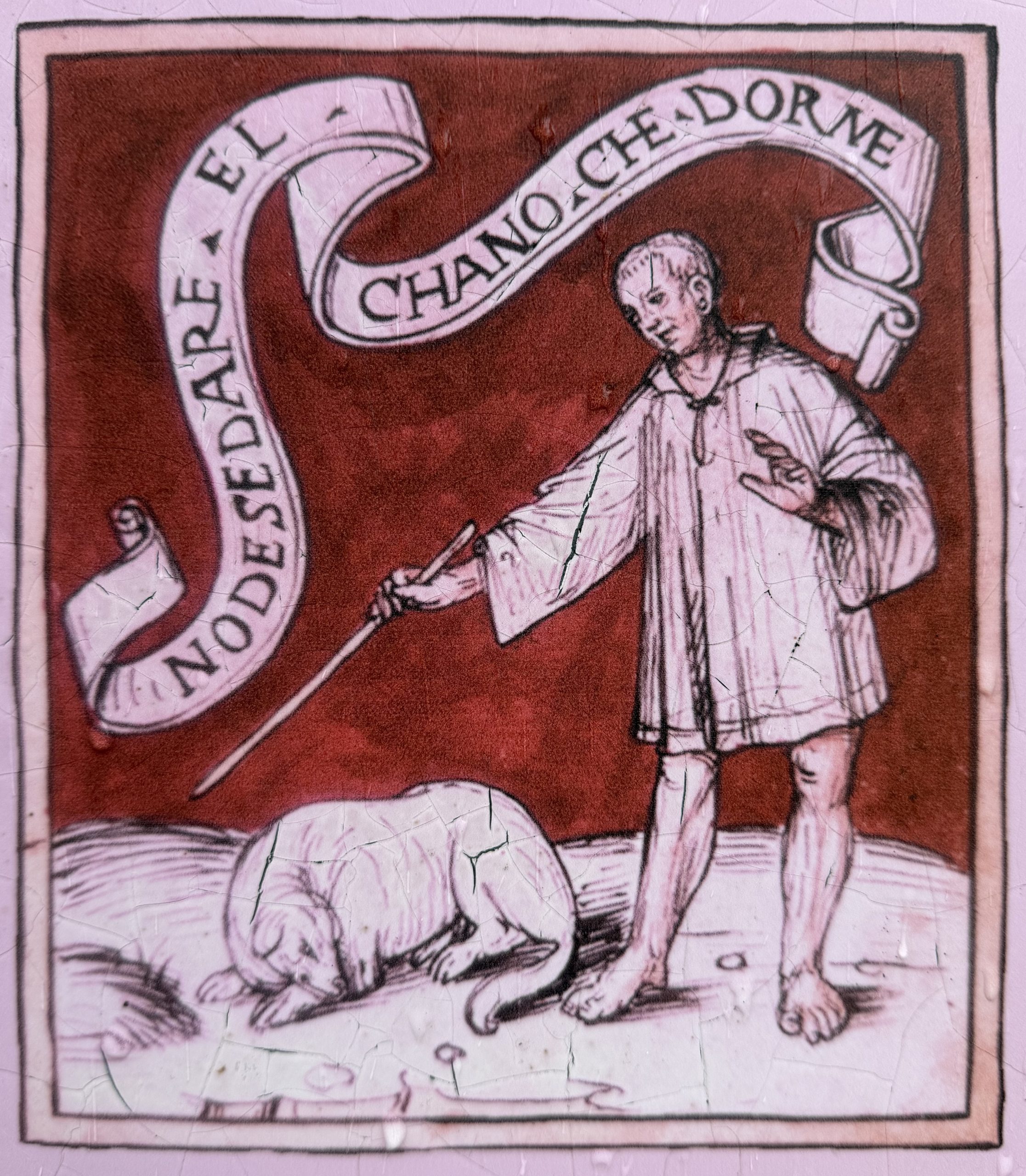
Exercise 2: in a square, oval or circular frame, draw a picture about one of the following proverbs involving an animal. Write the proverb in beautiful, clear letters in a bar, frame or in a decorative ribbon (example below). If drawing the animal you choose is still too difficult, you can trace an existing picture.
You can’t teach an old dog new tricks
Meaning: you can’t force an old person to change
One swallow does not make a summer
Meaning: don’t think too quickly that everything will go exactly the way you want
A bird in the hand is worth two in the bush
Meaning: sometimes it’s better to have trust in something that feels close
Let sleeping dogs lie
Meaning: don’t talk about a problem or danger that you can easily avoid by being silent about it.
When the cat’s away the mice will play
Meaning: When the parents (or teachers) aren’t there, the kids can go their own way
Putting the cart before the horse
Meaning: to tackle something in such a way that it is useless and cannot work at all
When there’s one sheep over the dam, more will follow
Meaning: if one person tries something new, the others dare too
You never know how a cow catches a hare
Meaning: Something can always work out unexpectedly, if you just try
3.FABLES
There are many fables in which real animals play a role. The animals talk and behave like humans, sometimes smart, sometimes stupid. Often the fables are moralistic as well as funny. One example is the fable of a know-it-all donkey, depicted here in a woodcut.
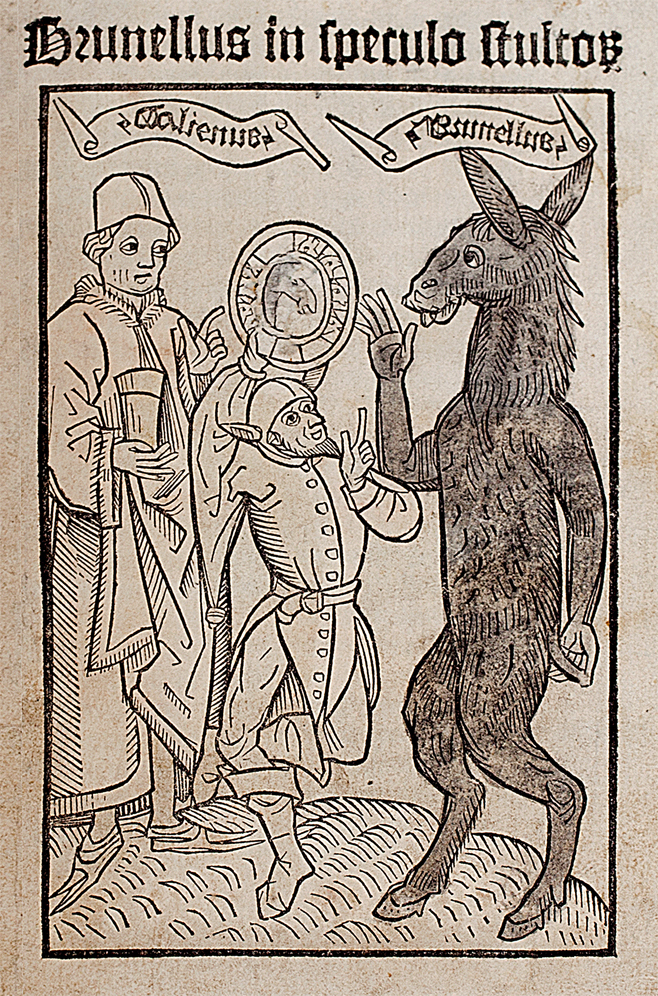
The fable: A know-it-all donkey asks the doctor for a longer tail. The doctor (on the left) says there’s nothing he can do about it, but the donkey thinks he knows better. Because he keeps nagging, the doctor gives him a fake prescription (which, of course, will never help). In the center, a jester with donkey ears holds up a mirror so the donkey might see his own stupidity. The doctor also points the donkey to the mirror. Unfortunately, the donkey still thinks he knows better. Know-it-alls, after all, have little self-reflection and certainly no self-mockery. Woodcut from The Fool’s Mirror, 1490, Artist unknown.
EXTRA: Create an illustration for the following fable about a hedgehog and a snake: “A hedgehog asks a snake if he can use his burrow for the winter. The snake agrees but can’t sleep because of the hedgehog’s spines. The moral of the story is that charity can sometimes backfire.