Chapter 4 | DECORATIVE RIBBONS
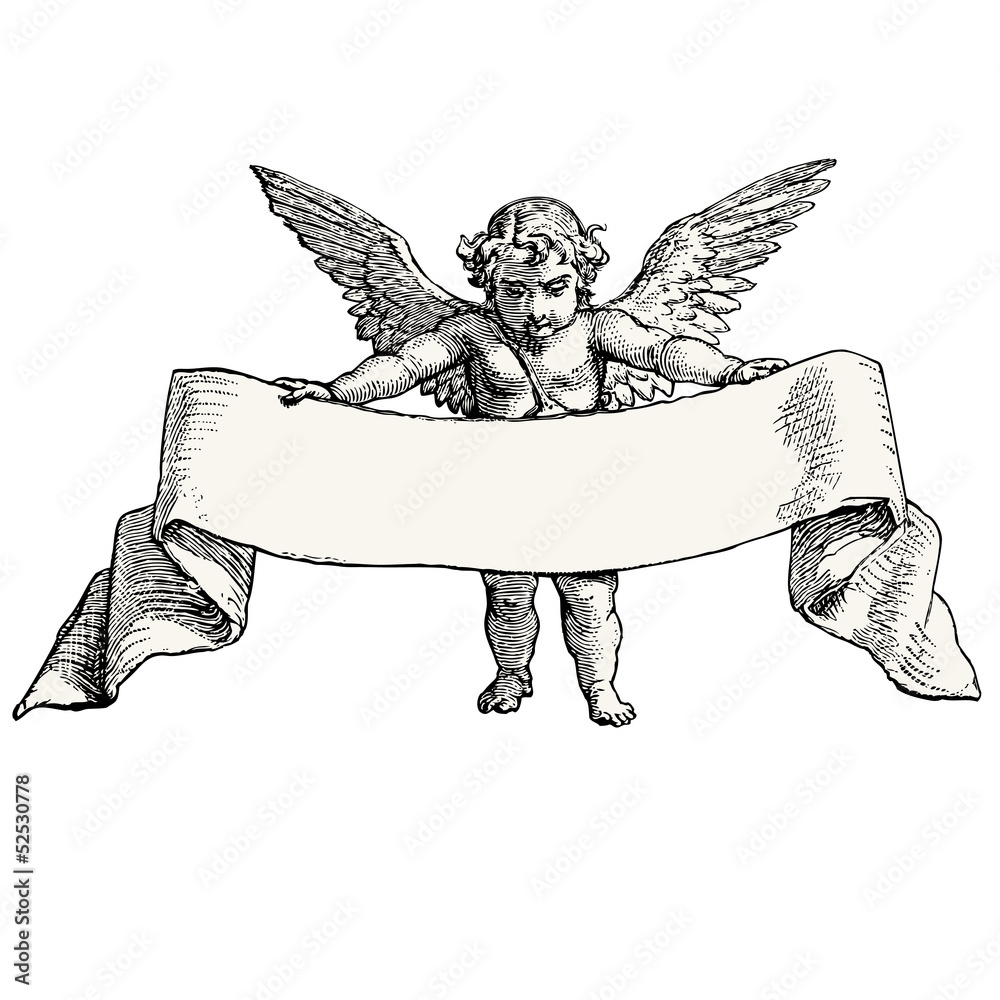
Art history features many decorative ribbons, sometimes with a name or saying on them.
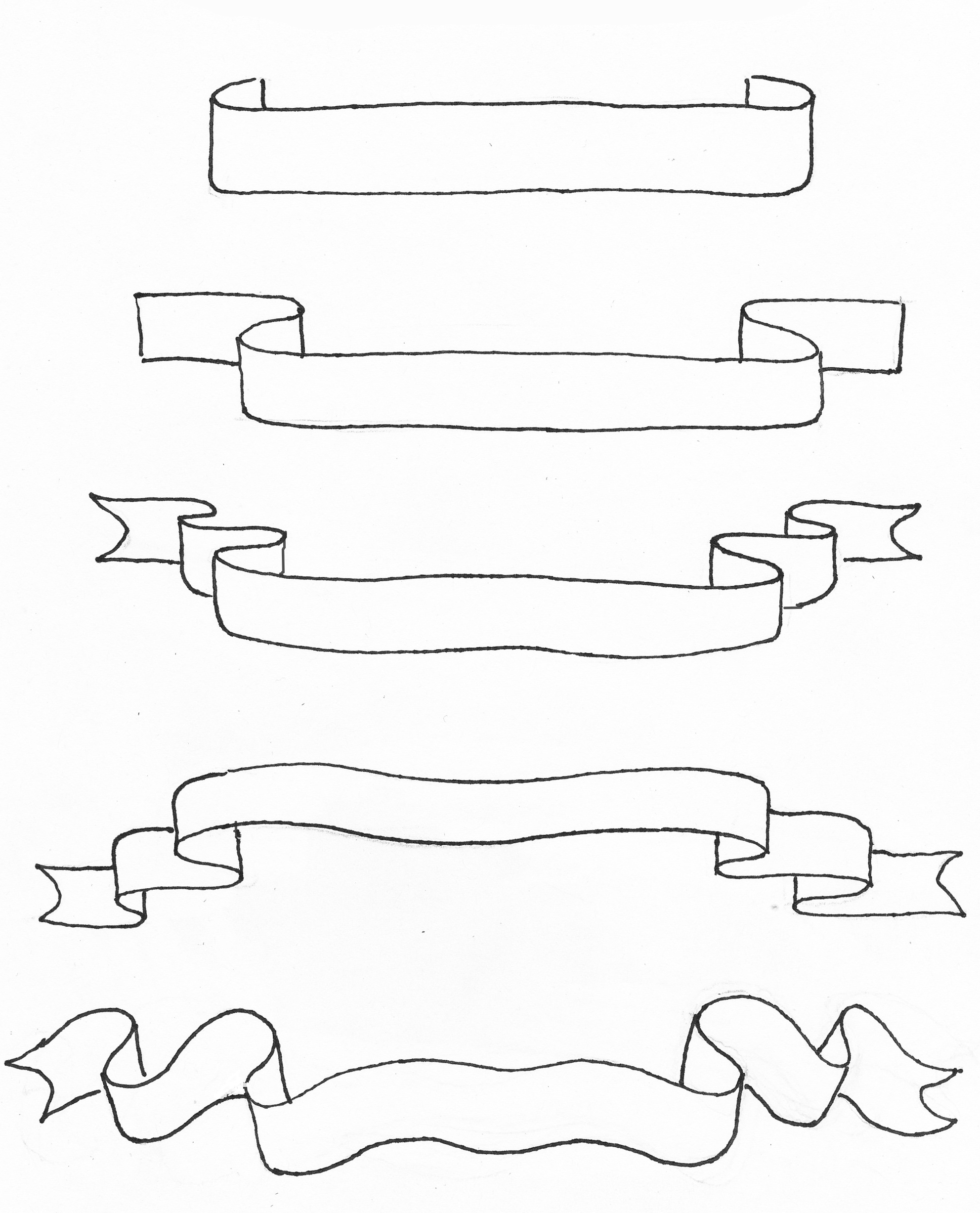
Drawing decorative ribbons becomes a lot easier if you use a serpentine or sling line.

Exercise 1: copy one or more of the following decorative ribbons. Towards the bottom one they become more and more flowy. For each ribbon follow steps 1 to 3.
Step 1: First draw the continuous winding sling line (image above). Sometimes that S-line is at the top, sometimes at the bottom.
Step 2: Draw the vertical lines exactly where the sway line changes direction and where the ribbon ends on the left and right. Make sure the ribbon stays the same width everywhere.
Step 3: Finish the ribbon. Make the bends nice and round, so no sharp corners. If you like, write a name or saying in beautiful letters on your favorite ribbon.
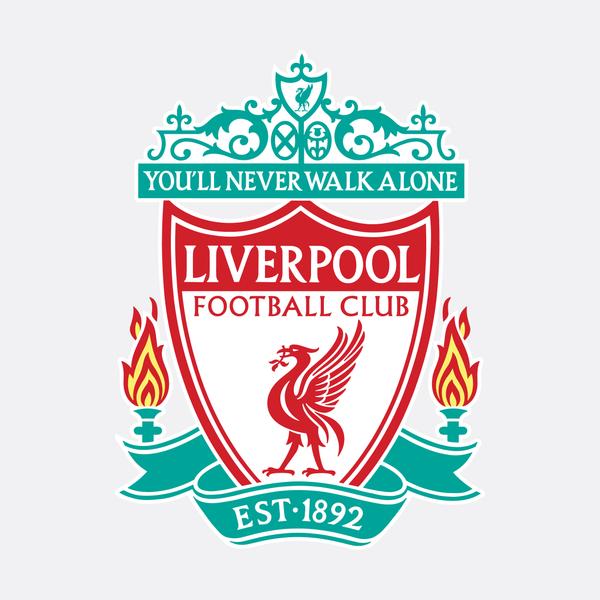
Sometimes a decorative ribbon is part of an emblem/brand, such as that of the famous English football club Liverpool. The decorative ribbon reads EST.1892. EST is the abbreviation of ‘established’ and means that the club was founded in 1892.
Exercise 2: Design your own emblem with a decorative ribbon for something or someone that is important to you.
On the giant wooden barrel vault of the large church in Naarden/the Netherlands, painted around 1510-1518, I saw a decorative ribbon loosely wrapped around a pillar, with a short French motto on it (Plus outre: further and further).
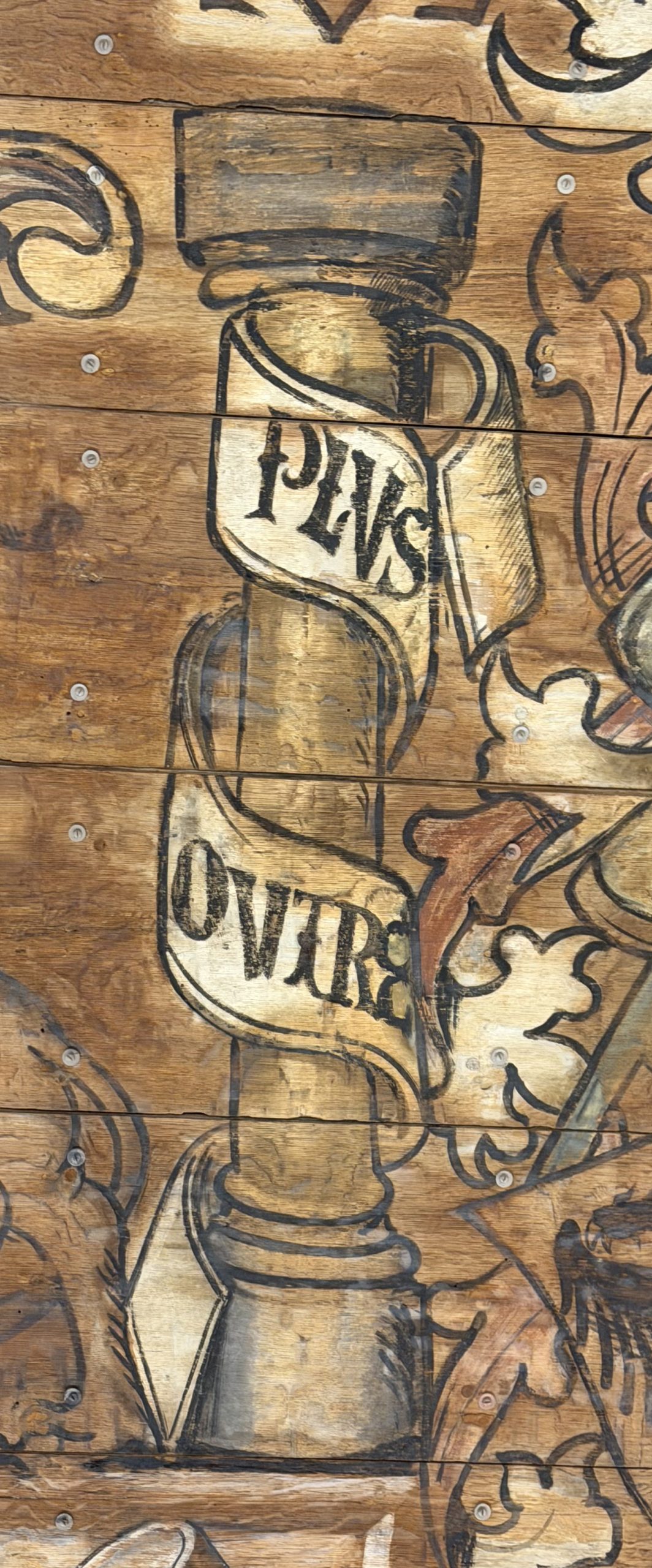
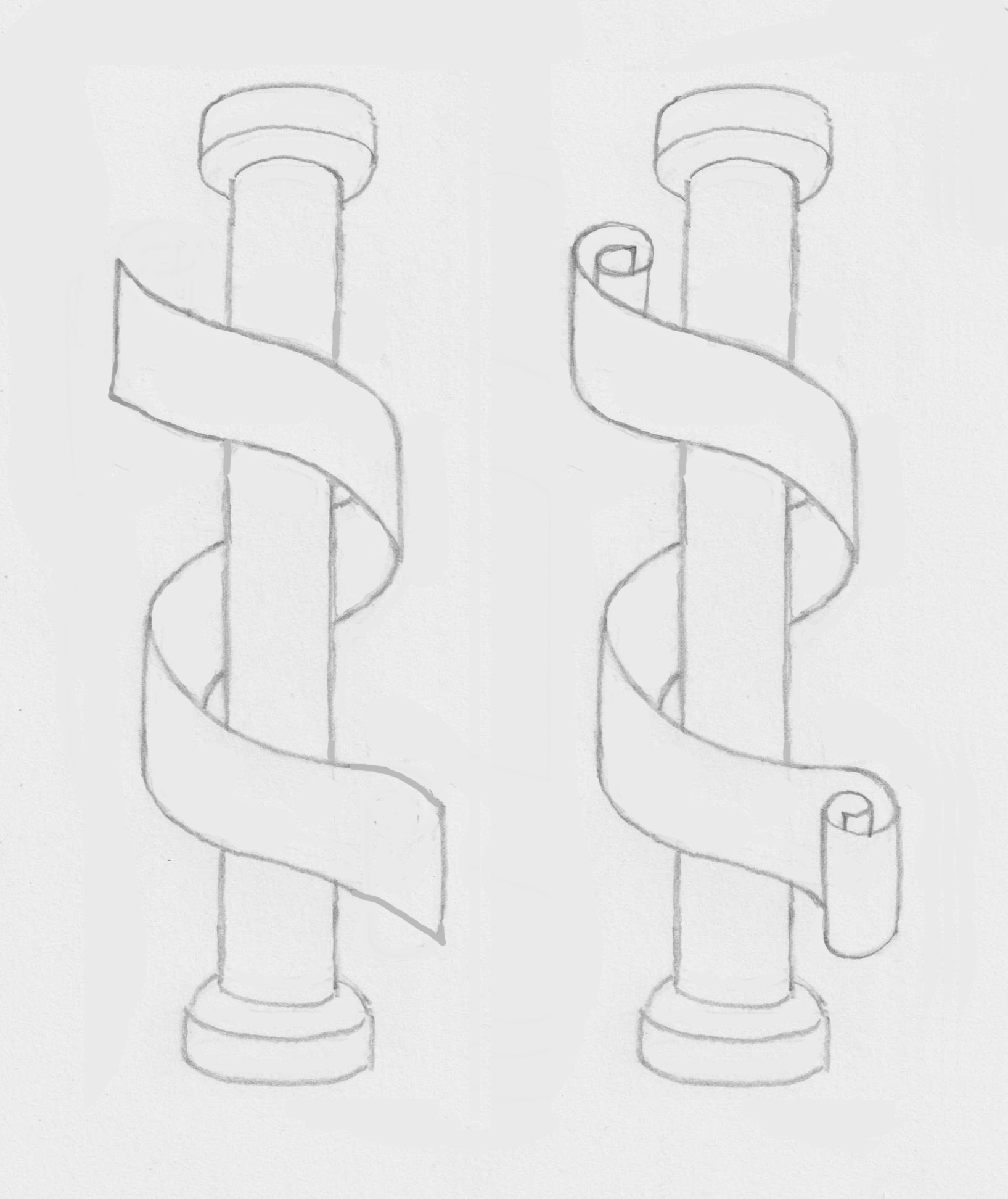
Exercise 3: Draw a decorative ribbon around a pillar and, if desired, write a short text on it or color the ribbons. Note: there is no continuous S-line here. You can choose to curl the ends of the ribbon.
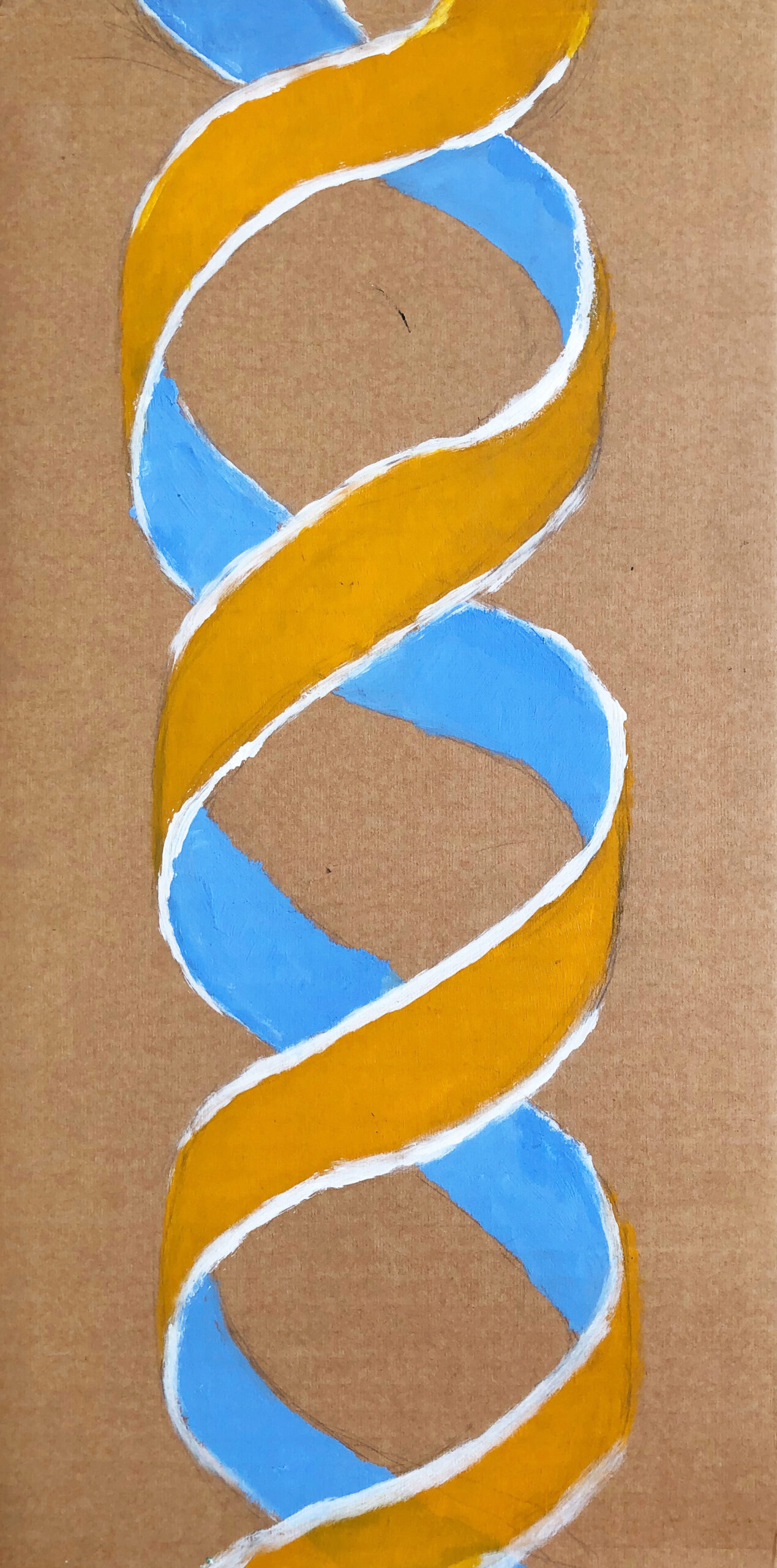
EXTRA: This one is for drawing puzzlers. The next two ribbons twist around each other. There is no continuous S-line. It is useful to first draw two vertical guide lines so that the width remains the same everywhere. In color, it is important that the ribbons have a clear front and back side.